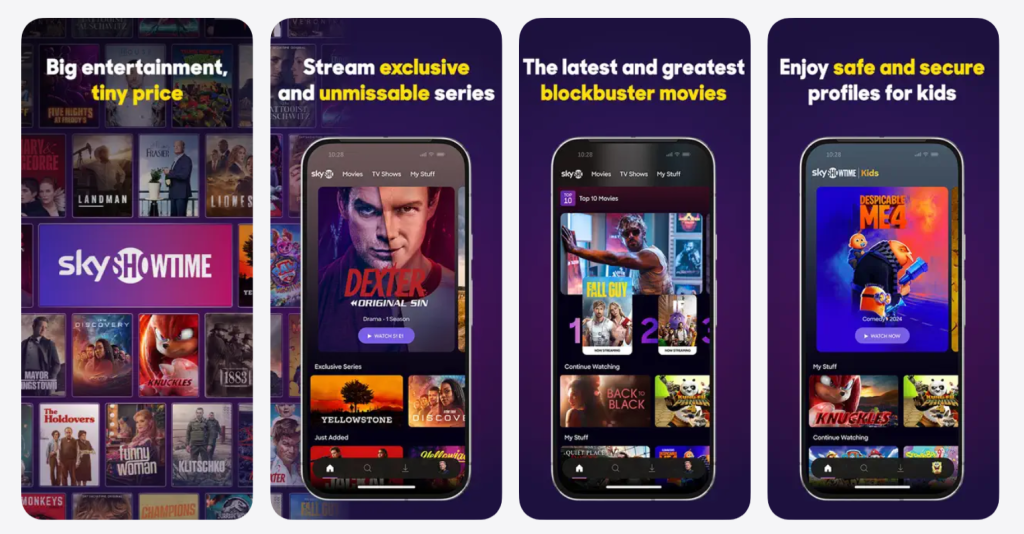
SkyShowtime is the kind of platform that makes people question why they are paying for so many separate subscriptions in the first place. Positioned as a premium entertainment hub for Europe, it stacks well-known studio brands and popular franchises into one app, pricing it to function either as a sensible add-on or a strong primary service, depending on household viewing habits.
The key to understanding this platform is realizing it is not trying to be everything to everyone. It is not a sports-first product, nor is it a bottomless archive of every niche film ever made. Instead, it wins by combining big-name series, recognizable studios, and a steady flow of mainstream releases—saving viewers from the frustration of chasing content across multiple apps.
For households trying to map out their streaming landscape, this service earns its place because it delivers a specific, reliable type of value: big studios, binge-friendly shows, and a straightforward viewing experience tailored for supported European markets.
What SkyShowtime Actually Is
Many people hear the name and assume it is simply another network’s version of the standard giant streaming services. That is not the most accurate mental model.
A cleaner way to think about it:
- It is a premium entertainment streaming service built specifically for select European regions.
- It bundles content from multiple major studio brands under a single subscription.
- It is designed for maximum simplicity: browse, hit play, download, and repeat.
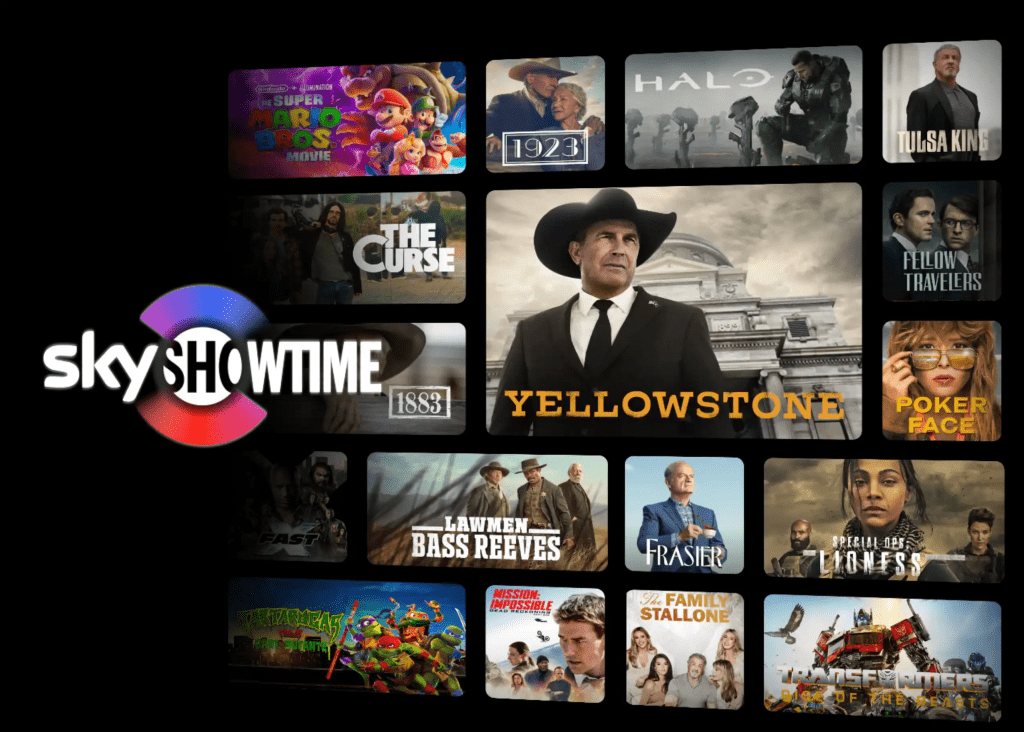
The expectation should be clear: high-quality series, blockbuster movies, massive franchises, and a rotating mix of new and familiar titles. It does not focus on live broadcast channels as the core experience, and it is definitely not a sports-only destination.
Content Library and What You’ll Actually Watch
The library is the deciding factor—this is where the platform either clicks instantly or doesn’t.
What it excels at:
- Big, polished drama and thriller series that dominate cultural conversations.
- “Just press play” movie nights where viewers want to watch movies online without digging through menus for an hour.
- Franchise and studio-driven entertainment featuring characters and worlds viewers instantly recognize.
- Households with varied tastes where different family members prefer different genres.
Where expectations can clash:
- If a user subscribes solely for one specific franchise and expects it to remain in the catalog forever.
- If a household primarily watches live sports and athletics.
- If a viewer is looking for a massive, obscure archive of classic or independent cinema.
A practical way to decide is to ask one question: Does the household’s weekly viewing lean toward premium series and mainstream movies? If yes, the fit is usually exceptionally strong.
Key Features That Matter in Real Life
Platforms often boast features that sound identical on paper. What actually matters is how those tools behave when the TV is on, the viewer is tired, and nobody wants to troubleshoot tech issues. Here are the features that make the biggest real-world difference:
- Profiles and household separation: When profiles are done right, recommendations stay clean. Without them, one weekend of kids’ cartoons can permanently reshape the home screen into chaos.
- Downloads for offline viewing: Offline viewing feels optional until the first long flight, a sudden power outage, or a night of terrible Wi-Fi.
- Multi-device support: Most households mix phones, tablets, smart TVs, and streaming sticks. A service only becomes the default choice if it hands off smoothly across all screens.
- Quality and “premium tier” upgrades: In many markets, the service offers multiple tiers, including options for higher 4K resolution and more simultaneous streams. This is vital for households where multiple screens are active at once.
- Search and discovery: A strong library means nothing if viewers cannot find what they want quickly. Fast “browse-to-play” time is the difference between an app people love and one they forget exists.
Plans and Pricing
Pricing and billing options vary by country, so the smartest way to evaluate the cost is to look at how the tiers are structured rather than focusing on a single localized number.
In general, supported regions offer a combination of:
- An ad-supported plan: Lower monthly cost, ads included.
- A standard ad-free plan: Cleaner viewing, typically the default household choice.
- A premium plan: Ad-free viewing, often adding higher video quality, more simultaneous streams, and increased offline download limits.
How to choose fast:
- If the service is mainly for casual, background entertainment, the ad-supported tier is fine.
- If it is meant to be a primary application for daily viewing, paying for the ad-free standard tier is almost always worth the upgrade.
- If multiple people watch different shows on different screens at the same time, the premium tier prevents household bandwidth arguments.
A simple rule: If people in the house are already irritated by ads on other platforms, do not gamble—go straight to an ad-free plan.
User Experience: The “Couch Test”
A streaming service can have a brilliant library and still fail the “couch test.” The couch test asks four simple questions:
- Can someone open the app, find a title, and start watching in under a minute?
- Does the interface feel stable and responsive on a living room TV?
- Does it accurately remember watch progress?
- Is the home screen genuinely helpful, or is it visually noisy?
When the experience is clean, the service becomes a daily habit. When it is messy, people quietly drift back to whatever app they were previously using. SkyShowtime generally aims for a highly straightforward experience: pick a title, watch it, and resume it later without friction. That is exactly what most households want from a non-sports entertainment hub.
Who SkyShowtime Is Best For
The Best Fit:
- Viewers who binge premium series and want great TV shows to watch that feel mainstream and highly produced.
- Households with mixed tastes (e.g., someone wants intense drama, someone wants light comedy, someone wants family animation).
- People who want a studio-heavy library without paying for five separate brand-specific subscriptions.
- Viewers who like strategically rotating a few core streaming apps throughout the year.
Not the Best Fit:
- Sports-first households that only subscribe to platforms broadcasting live events.
- People who exclusively watch one narrow, niche genre.
- Viewers hunting for an “everything archive” of deep-cut films.
Advantages
- Strong “value per hour watched”: If a household actively uses it, the ratio of cost to premium entertainment is excellent.
- Studio-driven content mix: The library feels familiar in the best way—packed with recognizable franchises, popular series, and easily recommendable titles.
- Versatility: Some apps only work as a primary subscription; others only work as an occasional rotation. SkyShowtime functions beautifully as either, depending on what else a household subscribes to.
- Clean household appeal: It makes perfect sense as a shared subscription for multiple demographics living under one roof.
Disadvantages
- Availability is strictly regional: This is not a global product. Travelers and international viewers must check local availability and catalog differences.
- Library rotation: Streaming rights fluctuate. Some titles will come and go, making it risky to subscribe long-term for just one highly specific show.
- No live sports focus: If a user expects to stream major global tournaments, they will be severely disappointed.
- Tier confusion: With multiple plan types (ads, standard, premium), new users need to pay attention during sign-up to avoid paying for the wrong setup.
Safety, Privacy, and Family Controls
A streaming platform seems low-risk until shared household viewing gets messy—kids clicking inappropriate content, family members accidentally buying rentals, or passwords floating around group chats.
Practical safety moves that actually help:
- Use a strong password and never reuse logins across different streaming platforms.
- Turn on PIN controls for purchases if rentals are enabled in your specific region.
- Create strict, separate profiles immediately so children do not permanently ruin the algorithm’s recommendations.
- Do not share the account beyond the physical household to avoid random logouts, maxed-out stream limits, and security headaches.
For families, the biggest operational win is simply keeping kids locked inside kids’ profiles.
Alternatives That Make Sense
Every streaming service looks great when reviewed in a vacuum. The real question is what a viewer should choose if SkyShowtime is not the perfect fit.
- For the biggest variety: Netflix remains the winner for sheer breadth, global momentum, and algorithmic discovery.
- For a value bundle plus movie rentals: Prime Video is a strong alternative because it blends subscription viewing with an immense optional rental storefront.
- For family-first franchises: Disney Plus is incredibly hard to beat for households deeply loyal to major childhood and sci-fi franchises.
- For prestige series: HBO Max (Max) is the standard alternative people compare against when hunting for top-tier, award-winning drama.
The smartest approach for most households is not about finding one single “winner.” It is about building a small, highly effective lineup: one main entertainment app, one supporting app, and one optional service rotated in and out purely for specific seasons or releases.
FAQs
- What is SkyShowtime best known for?
It’s best known for bundling premium series and movies from major studio brands into one subscription, aimed at viewers who want “big entertainment” without juggling many apps. - Is SkyShowtime available worldwide?
No. Availability is region-dependent, so viewers should confirm whether it’s offered in their country and whether the local catalog matches what they expect. - Does SkyShowtime have ads?
In some markets, there’s an ad-supported plan. Other plans may be ad-free. The exact options depend on region. - Can viewers download titles for offline watching?
Offline downloads are typically supported on mobile devices, and higher-tier plans (where offered) may increase download limits. - Is SkyShowtime good for families?
Yes, especially when profiles are used properly. It’s most family-friendly when kids have their own profile and watch habits don’t spill into the main recommendations. - How many devices can stream at once?
That depends on the plan. Standard and premium-style tiers (where offered) often differ in simultaneous streams. - Does SkyShowtime have live TV channels?
It’s primarily an on-demand streaming service. Any “channel-like” viewing experiences tend to be curated collections rather than traditional live TV. - Is the catalog the same in every country?
Not always. Licensing and distribution deals vary, which can affect what’s available in different regions. - What’s the fastest way to know if it’s worth subscribing?
Check the current catalog highlights in your region and compare them to what the household actually watches in a typical month. - Is it better as a main service or a rotation service?
It can be either. If the household watches premium series weekly, it can be a main service. If they binge specific releases, it can work well as a rotation service. - Will it replace Netflix or Disney Plus?
For some households it can reduce dependence on other subscriptions, but it won’t perfectly replace a service that has a very different catalog focus. - What’s the biggest mistake people make when subscribing?
Choosing a plan without thinking about household habits—especially ads tolerance, number of viewers, and whether offline downloads matter. - Is SkyShowtime good for people who hate browsing?
Yes—if discovery and home-screen recommendations feel clean in the household setup. Profiles help a lot here. - What should viewers do first after signing up?
Create profiles, set parental controls if needed, build a short watchlist, and test streaming on the main TV device to confirm everything runs smoothly. - Who should skip SkyShowtime?
People who mainly subscribe for live sports, or viewers who only watch one very specific niche and don’t care about broader studio content.
Final Verdict
SkyShowtime makes the most sense for viewers who want a premium, studio-driven library that feels mainstream, bingeable, and easy to live with in a real household. It won’t be the perfect solution for sports-first streaming or ultra-niche tastes, but for everyday entertainment—especially in supported European markets—SkyShowtime is a strong, practical pick for the ForeverWatch streaming lineup.