GuideDoc is built for people who treat documentaries as the main event, not a side category they click once a month. Compared with broader streaming services, it has a much tighter purpose: helping viewers find nonfiction films, global stories, and curated documentary picks without digging through unrelated entertainment.
GuideDoc’s promise is simple: fewer distractions, more purpose. Instead of juggling ten apps, viewers can open one place that’s designed around nonfiction storytelling. The goal isn’t to compete with blockbuster streaming. The goal is to become the doc lover’s default tab, the place viewers open when they want to watch documentaries with more intention.
This review breaks down what GuideDoc is, how it feels in real homes, what features matter most, how pricing typically works in an evergreen way, who sticks with it long-term, where it shines, where it can frustrate people, how to use it safely, and what alternatives make sense if the fit isn’t right.
What GuideDoc Is Best For
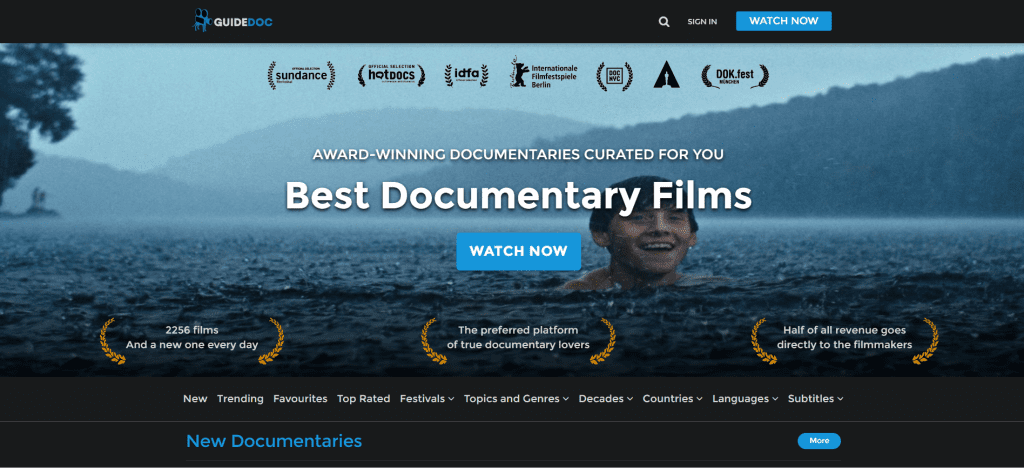
GuideDoc works best when the viewer wants documentaries to be a weekly habit.
It’s a strong fit for:
- Viewers who prefer true stories over fiction most nights.
- People who want international documentaries, festival-style picks, and deeper topics.
- Anyone tired of algorithms that push the same trending style everywhere.
- Viewers who like discovering directors, themes, and documentary styles beyond the mainstream.
- Households that enjoy doc nights and want a service built specifically for that.
- People who want a calmer alternative to noisy, all-purpose entertainment apps.
It can be a weaker fit for:
- People who mainly watch scripted TV, reality, or blockbuster movies.
- Viewers who want live sports, live channels, or day-one mainstream releases.
- Households that need one subscription to satisfy kids, parents, and grandparents equally.
- People who don’t enjoy subtitles or global content, depending on what they pick.
- Viewers who want documentaries only occasionally and already feel covered elsewhere.
A practical way to think about it: GuideDoc isn’t trying to replace a big general streaming service. It’s trying to be the doc specialist that rounds out a lineup.
Content Approach and Catalog Feel
A lot of streaming platforms treat documentaries like a corner aisle in a supermarket. GuideDoc treats them like the whole store.
That changes the viewing experience in a few big ways.
Discovery Feels Intentional
Instead of endless scrolling through unrelated genres, the platform naturally pushes viewers toward documentaries that feel worth the time.
That doesn’t mean every title is heavy or serious. It means the service is designed to keep the experience inside nonfiction storytelling.
A viewer might open GuideDoc for true crime documentaries one week, then shift into culture, politics, history, or personal stories the next. The catalog works best when the viewer follows curiosity rather than chasing only famous titles.
Global and Festival Energy Is Part of the Identity
Many documentary fans don’t just want big studio docs. They want voices from different countries, styles, and perspectives.
GuideDoc usually appeals to that kind of viewer: someone who wants to watch beyond the same mainstream cycle. It can be a strong fit for people who enjoy international nonfiction, director-led storytelling, and best foreign movies that lean more thoughtful than commercial.
That global feel is important because documentary fans often want perspective. They want to see how people live, struggle, build, protest, create, and survive in places far beyond their own routine.
The Library Is About Depth, Not Hype
Mainstream platforms often win with marketing moments. Documentary-first platforms win with consistency.
The best feeling is opening the app and realizing the catalog is on brand almost every time. Viewers are not bouncing between superhero shelves, dating shows, kids cartoons, and random old thrillers. They are in a nonfiction environment from the start.
That makes GuideDoc especially useful for people who enjoy history documentaries, science documentaries, society stories, cultural reporting, and personal deep dives.
The Platform Encourages Doc Habits
Because the service is focused, viewers often watch more documentaries than they expected. Not because they’re forcing it, but because it becomes easy.
The hardest part of streaming is picking something. GuideDoc is built to remove that friction.
For a viewer who wants smarter downtime, that matters. A documentary-first platform can turn a random evening into a useful one without making the experience feel like schoolwork.
Documentary Themes That Fit GuideDoc
GuideDoc should not be treated like a general movie app. Its best internal-linking opportunities come from documentary types, factual themes, and nonfiction viewing habits.
Depending on the current catalog, viewers may use it for:
- nature wildlife documentaries when they want calmer visual storytelling.
- political documentaries when they want power, policy, conflict, or social issues.
- sports documentaries when they want real competition, pressure, and personal stories.
- music documentaries when they want artist stories, culture, and performance history.
- space documentaries when they want big questions and visual science.
- war documentaries when they want military history, conflict, memory, and survival.
That range matters because “documentary” is not one mood. It can mean investigation, beauty, biography, history, culture, science, crime, politics, or human drama.
Key Features That Matter
GuideDoc doesn’t need a hundred flashy features to be valuable. The features that matter are the ones that make nonfiction streaming easier and more enjoyable.
Strong Filtering for Documentary Browsing
Documentary lovers often browse by theme:
- Society.
- History.
- Crime.
- Culture.
- Science.
- Politics.
- Nature.
- Art.
- Music.
- War.
- Sports.
- Biography.
A good documentary platform makes it easy to find the right mood without feeling lost.
This is where GuideDoc’s focus helps. The viewer is not fighting through a giant mixed catalog. They are already inside the right lane.
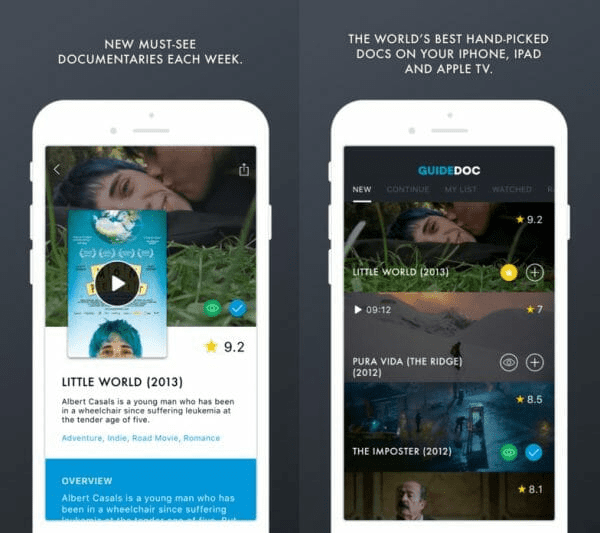
A Discovery-First Interface
When a service is built for one genre, recommendations can feel more accurate.
GuideDoc typically works best when viewers use the home screen as a programming guide rather than treating it like a search engine.
That means the viewer opens the platform and asks:
- What theme feels right tonight?
- What story looks worth attention?
- What country, subject, or director seems interesting?
- What can I finish without feeling drained?
That is different from opening a general service and searching by title only.
Language and Subtitle Friendliness
For a documentary platform that leans global, subtitles and language options matter.
Viewers who enjoy international documentaries usually care about:
- Clear subtitles.
- Easy language settings.
- Good playback quality.
- Accurate descriptions.
- Enough context to understand what kind of story they are starting.
This matters because global documentaries can be one of GuideDoc’s biggest strengths. But if subtitles or language handling feel clumsy, the experience becomes harder than it should be.
Watchlist Discipline
A watchlist becomes useless when it grows into a junk drawer.
With a documentary-focused platform, viewers can keep a watchlist short and intentional: 10 to 20 films they genuinely want to watch, not 300 titles they’ll never start.
A practical watchlist structure could look like:
- One investigative pick.
- One history pick.
- One culture pick.
- One science pick.
- One lighter human story.
- One longer weekend documentary.
- One short midweek documentary.
That keeps the service useful instead of overwhelming.
Cross-Device Convenience
Documentary viewing often happens in different situations:
- Focused TV nights.
- Headphones on a laptop.
- Shorter sessions on a phone.
- Weekend viewing on a tablet.
- Travel downtime.
- Quiet solo viewing after work.
A good documentary platform needs to feel smooth across devices.
If the viewer starts on TV but finishes on a laptop, the experience should not feel broken. That cross-device convenience is what helps a focused service become part of a real routine.
Actionable Tip: Pick a Theme for the Week
The fastest way to enjoy GuideDoc is to pick one theme for the week.
Examples:
- Science week.
- True crime week.
- World stories week.
- History week.
- Political stories week.
- Music week.
- Sports stories week.
One theme. That’s it.
This turns browsing into a simple decision and helps viewers avoid the usual “I don’t know what to watch” problem.
Pricing
GuideDoc is typically positioned as a paid streaming service rather than a free-with-ads platform. Pricing and promos can change over time, so the evergreen way to judge value is not by a specific number. It’s by how often the viewer will use it.
GuideDoc tends to be worth it when:
- The viewer watches documentaries weekly or wants to.
- The viewer finishes what they start and doesn’t abandon docs halfway.
- The household wants a doc-specific subscription instead of hunting for documentaries across multiple platforms.
- A viewer wants curated documentaries, not random clips and short-form noise.
- Someone wants a deeper nonfiction layer beside their mainstream entertainment apps.
It tends to be less worth it when:
- The viewer watches documentaries occasionally and already gets enough through mainstream platforms.
- The household wants one service to cover everything.
- The viewer prefers light background entertainment rather than focused viewing.
- The viewer mainly watches scripted drama, comedy, reality, or blockbuster movies.
- The household needs children’s content, live channels, sports, and new releases in the same place.
A Simple Value Test
Use this test before keeping the subscription:
- Browse GuideDoc for 10 minutes
Do not decide from the brand idea alone. Look at the actual catalog. - Save 10 titles to the watchlist
The service should produce real interest quickly. - Ask whether three will be watched this month
If yes, it is likely worth keeping. - Check topic variety
If all interesting titles sit in only one theme, the viewer may need to rotate the subscription. - Decide whether it is permanent or seasonal
Some viewers keep GuideDoc year-round. Others join for a month, binge their watchlist, pause, and return later.
That approach keeps subscriptions under control and prevents subscription fatigue.
User Base and Who Sticks With It
GuideDoc is not for everyone, and that’s actually a strength.
People who typically stick with GuideDoc:
- Documentary enthusiasts who want more than mainstream headline docs.
- Viewers who love international content and don’t mind subtitles.
- Curious learners who want something smarter than social media scrolling.
- Film and nonfiction fans who value curation and discovery.
- Households that treat documentaries like a weekly ritual.
- Viewers who enjoy best documentary movies more than random background entertainment.
People who often cancel:
- Viewers who want blockbuster entertainment first.
- Households that mainly watch scripted series and reality TV.
- People who dislike rotating between services and want a single everything subscription.
- Viewers who want sports or live TV baked in.
- Anyone who subscribes during a short burst of motivation but does not actually watch nonfiction regularly.
A common pattern: GuideDoc becomes the second subscription that gives a lineup more depth. It doesn’t always replace mainstream services. It complements them.
Advantages
Here’s where GuideDoc usually wins:
- Purpose-Built for Documentaries
Everything about the experience is designed for nonfiction viewing. That focus reduces clutter and improves discovery. - Less Decision Fatigue
When the whole platform is documentary-driven, viewers spend less time browsing and more time watching. - Great for International and Niche Documentaries
Documentary fans often want variety beyond mainstream libraries. GuideDoc usually appeals to that mindset. - Encourages Better Viewing Habits
Instead of background noise, documentaries reward attention. A doc-first platform makes it easier to keep watching intentionally. - Strong Doc Night Value
For couples, roommates, or solo viewers who love weekly doc nights, GuideDoc can become a dependable routine.
Disadvantages
GuideDoc also has real limits:
- Not a Mainstream Entertainment Replacement
If the household wants big franchise entertainment, GuideDoc won’t cover that role. - Taste Matters More Than Usual
With documentary-focused platforms, a viewer’s interests determine everything. If someone doesn’t like nonfiction storytelling, no feature can fix that. - Some Viewers Want Unlimited Variety, Not Curated Variety
Curation is a win for many people. But some viewers prefer massive catalogs and simple comfort browsing. - Not Ideal as the Only Household Service
In mixed households with kids, adults, and different tastes, GuideDoc is often better as the specialty add-on. - Heavy Topics Can Lead to Burnout
Documentaries can be intense. If a viewer binges heavy themes too often, they might need lighter options in the lineup.
Safety and Account Security
GuideDoc is generally safe to use when accessed through official apps and normal subscription methods.
The biggest risks are the same risks that exist on any streaming platform: weak passwords, careless account sharing, and logging in on shared devices without signing out.
Best-practice safety checklist:
- Use a strong, unique password.
- Avoid sharing login details widely.
- Log out on shared devices.
- Keep devices updated.
- Use purchase protections and device locks in shared households.
- Avoid unofficial APKs or lookalike sites.
- Keep the watchlist tidy if multiple people share the account.
A practical household tip: if multiple people watch on the same account, avoid sharing the password beyond the home. That prevents recommendation chaos and account headaches.
Best Alternatives to GuideDoc
The best alternative depends on what the viewer wants from GuideDoc.
GuideDoc vs Curiosity Stream
Curiosity Stream can be a strong fit for science, history, nature, and technology-focused viewing. It is usually broader in factual learning topics, while GuideDoc feels more like a documentary-curation platform.
Curiosity Stream is better when the viewer wants a steady factual-learning subscription. GuideDoc is better when the viewer wants documentary discovery, global stories, and a more film-like nonfiction experience.
GuideDoc vs Kanopy
Kanopy can be excellent if a viewer has access through a library or university. It often feels thoughtful, educational, and library-backed, while GuideDoc is more directly positioned as a paid documentary-first service.
Kanopy is stronger when free library access exists. GuideDoc is stronger when the viewer wants a dedicated documentary subscription without depending on institution access.
GuideDoc vs Docsville
Docsville is one of the cleaner comparisons because it also sits in the documentary-focused lane. The difference comes down to catalog feel, discovery style, and which topics the viewer prefers.
A viewer who wants broad documentary browsing may compare both closely. The better choice depends on which current catalog produces more titles worth saving.
GuideDoc vs Curated Film Services
MUBI, Criterion Channel, and Fandor can overlap with GuideDoc for viewers who like film culture, global stories, and curated viewing. But they are not documentary-only services.
Those platforms make more sense when the viewer wants cinema as a whole. GuideDoc makes more sense when nonfiction is the main reason to subscribe.
GuideDoc vs Free Documentary Sources
Free documentary options can work, but they are usually less focused.
Some viewers may find documentaries inside free apps, public broadcasters, YouTube, or broader streaming catalogs. The tradeoff is discovery. Free sources can be useful, but they often require more digging and more quality control.
GuideDoc’s value is that the documentary lane is already built for the viewer.
Alternatives by Viewing Need
If the goal is documentary-first streaming, compare:
- Curiosity Stream.
- Kanopy.
- Docsville.
- GuideDoc.
- Documentary sections inside broader platforms.
If the goal is curated cinema with documentary overlap, compare:
- MUBI.
- Criterion Channel.
- Fandor.
- Sundance Now.
If the goal is factual learning, compare:
- Curiosity Stream.
- Kanopy.
- Public broadcaster documentary sections.
- Educational video resources tied to libraries or universities.
If the goal is casual free discovery, compare free documentary sections inside broader services, but expect more browsing effort.
A smart ForeverWatch lineup is simple: one mainstream entertainment service, one documentary-first service like GuideDoc, and one free or low-cost backup for casual nights.Doc) plus one free platform as a backup. That way, there’s always something to watch without paying for five subscriptions.
FAQs
- What is GuideDoc?
GuideDoc is a documentary-focused streaming platform designed for viewers who want curated nonfiction films and series. - Is GuideDoc a general streaming service like Netflix?
No. It’s built specifically around documentary viewing rather than “everything entertainment.” - Does GuideDoc have a lot of documentaries?
Yes, it’s designed around a deep documentary catalog and ongoing discovery, not a small “doc section.” - Is GuideDoc worth it for casual viewers?
It can be, but it’s best for people who watch documentaries regularly. Casual viewers might prefer a rotation subscription or a free alternative. - Can GuideDoc replace a mainstream streaming subscription?
For most households, it works better as a complement rather than a replacement. - What kind of documentaries work best on GuideDoc?
Viewers who enjoy global stories, festival-style documentaries, and deeper nonfiction themes often get the most value. - Is GuideDoc good for families?
It depends on the household. Families with mixed viewing needs often keep it as an “adult doc night” service and use a mainstream platform for general family viewing. - Does GuideDoc include true crime?
Doc platforms typically cover a range of themes, and true crime is often part of that mix depending on what the viewer chooses. - How can viewers get value fast?
Pick one theme for the week, build a short watchlist, and watch intentionally instead of browsing endlessly. - Is GuideDoc good for international documentaries?
Many documentary-first platforms appeal to viewers who want global stories, and GuideDoc tends to fit that preference well. - Is GuideDoc safe to use?
Yes—use strong passwords, avoid sharing logins widely, and stick to official apps and normal subscription methods. - What if a viewer runs out of time to watch documentaries?
GuideDoc often works well as a rotation subscription: subscribe, binge a watchlist, pause, then return later. - What are the best alternatives to GuideDoc?
Curiosity Stream, Kanopy (if available), and free platforms like Tubi or Pluto TV are common alternatives depending on the viewer’s priorities. - Who should skip GuideDoc?
Viewers who mainly want blockbusters, live sports, or scripted series should skip it and choose a general streaming service. - What’s the best way to use GuideDoc long-term?
Keep it as the documentary specialist in a lineup: watch a few films a month, stay curious, and avoid overloading the watchlist.
Final Verdict
GuideDoc is a strong pick for viewers who want documentaries to feel easy again—less scrolling, more watching, more discovery. It isn’t built to replace mainstream entertainment giants, and it doesn’t need to. It’s built to be the documentary specialist: the subscription that adds depth, global perspective, and curated nonfiction storytelling to a ForeverWatch-style streaming lineup. For people who genuinely enjoy documentaries and want a platform that respects their time, GuideDoc can become a reliable habit—and a surprisingly satisfying one.