Crunchyroll is the anime streaming service that most competitors end up being compared to, not because it does one flashy thing, but because it solves the boring problems that decide whether a fan stays: consistent seasonal releases, broad device support, and a library that feels built for rewatching. That’s the real battleground in anime streaming. Not “who has the best poster art.” It’s who makes it easiest to keep up, discover new series, and watch without friction when the episode drops.
This review breaks Crunchyroll down like a buyer would: what the service is, what it includes, how the plans typically work, where it shines, where it can frustrate, and which alternatives make sense depending on taste and region.
Overview
Crunchyroll is an anime-first streaming platform built strictly around three core promises:
- A massive catalog that isn’t just treated like a hidden “category” inside a general entertainment app.
- Seasonal releases that keep the experience current, rather than relying strictly on nostalgia.
- Anime-native features, including extensive language options, organized episode rollouts, and discovery rails that prioritize exactly how fans browse.
What matters most is that this is structured as a dedicated destination. If you are looking for the best places to watch anime as a primary hobby, this is usually the very first service evaluated. If you only want a handful of titles mixed inside a broader live-action entertainment bundle, this standalone app becomes optional, and the decision depends entirely on whether the specific titles you want are locked behind its paywall.
Another vital reality: licensing changes heavily by country. The global library is absolutely massive, but it is not identical everywhere. Regional availability dictates whether the service feels complete or frustratingly empty.
Features That Matter
The platform wins through repeatable, everyday features that matter long after your first week of browsing.
Fast discovery built for the medium
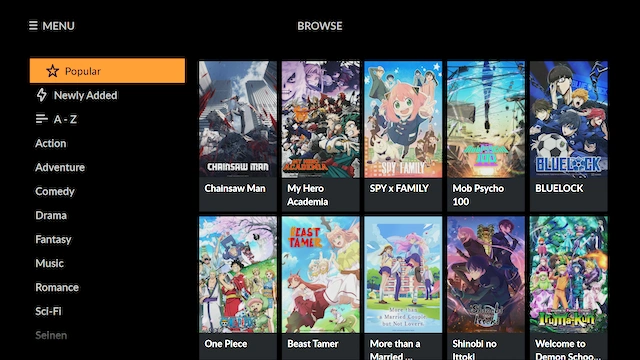
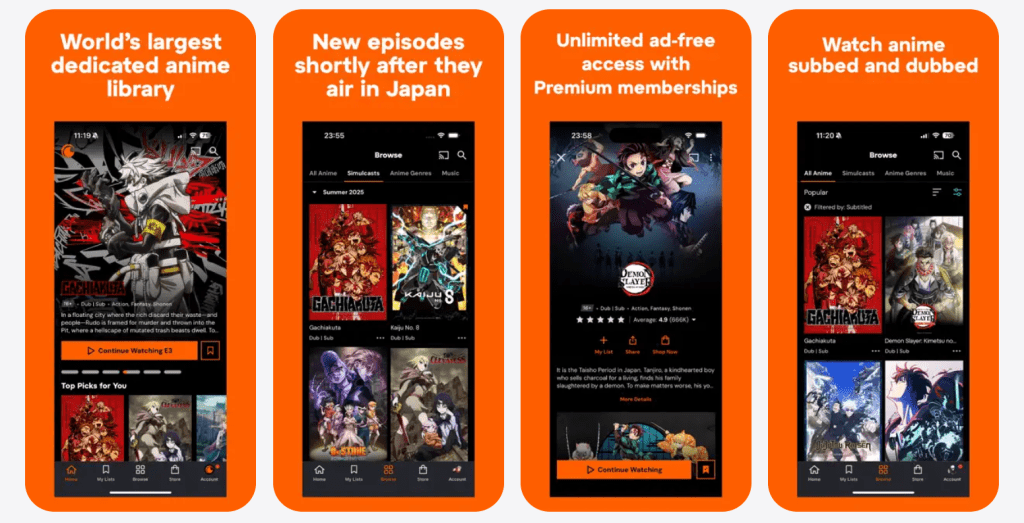
Fans do not browse the same way traditional movie fans do. They bounce rapidly between specific moods and genres, looking for the best slice of life anime to relax, or the best horror anime for a late-night marathon. This platform supports this exact behavior with category browsing that feels native rather than generic. The goal is simple: reduce the time spent searching and increase the time spent watching.
Subbed and dubbed options, organized clearly
The sub-versus-dub debate is not just a minor preference; it dictates whether a household can watch together or whether someone can casually watch while multitasking. A strong experience here includes multiple audio options when licensed, clear subtitle selections, and organized episode grouping so you don’t accidentally start the Japanese audio track when you wanted the English one. The best platform isn’t just the one that “has dubs”—it is the one that makes discovering the best comedy anime in your preferred language incredibly easy.
Seasonal releases and “keep up” viewing
Many fans watch in two distinct modes: binging older completed series, or religiously tracking currently airing shows week-to-week. This platform is heavily built for weekly seasonal mode. That creates true habit viewing, turning the service into an app you open several times a week to catch new anime to watch rather than logging in once a month.
Watchlists and continuity across devices
Episodes are often watched across multiple screens: the living room TV at night, a phone in bed, or a laptop during travel. A top-tier service must keep progress tracking flawless. Few things ruin a viewing session faster than the app claiming you are on episode three when you already finished episode nine.
Offline downloads
Offline viewing is a feature that sounds completely optional right up until it becomes essential. Whether dealing with a long commute, unstable home internet, or simply trying to save mobile data on a road trip, having the ability to download the best action anime straight to your tablet makes the higher-tier plans significantly more valuable.
Multiple profiles for households
For years, sharing an account was a massive headache because watch histories collided. Recently, the platform finally introduced multiple profiles for its premium subscribers. This is a game-changer for couples or roommates, ensuring that your customized recommendations and your current progress on the most popular anime of all time are not completely ruined by someone else in the house.
Pricing and Plan Structure
Pricing for streaming changes over time, and it often differs wildly by country. The absolute smartest way to evaluate the cost here is to look at the structural tiers rather than obsessing over a single monthly number.
Recently, the platform completely removed its free ad-supported tier for streaming episodes. You can no longer reliably use this as a free service; it strictly requires a paid subscription to access the content.
Most viewers are now choosing between two practical approaches:
The Standard Plan (The default choice)
This is the entry-level premium tier that most subscribers should evaluate first. It provides totally ad-free viewing, complete access to the library, and new episodes shortly after they air in Japan.
- Who it’s good for: Weekly watchers, fans who bounce between multiple seasonal shows, and solo viewers who just want reliable access. This is where the service truly becomes “worth it” for the average fan.
The Higher-Tier Plans (For power users)
Mid-tier and top-tier plans exist to serve people who need offline downloads, multiple simultaneous streams for different household profiles, and access to the included mobile Game Vault.
- Who it’s good for: Households watching at the exact same time on different TVs, frequent travelers who need offline episodes, and die-hard fans who want merchandise discounts in the official store.
Instead of asking “Is it cheap?”, a much better question is: How many hours of entertainment does this replace each month? If you watch 20+ hours a month, the cost per hour drops incredibly low, and the convenience dominates the decision.
The User Base
This service serves drastically different viewer types, and the experience changes based on how you watch.
The seasonal watcher
This viewer rigorously follows what is airing right now, week to week. They love online discussions and staying current. The platform fits perfectly here because of its massive focus on weekly release culture and fast app launches for the top rated anime series.
The binge-and-rewatch fan
This viewer loves diving into completed 100-episode arcs and hunting for the best anime series of all time. They thrive here because the library depth is staggering, allowing for massive weekend deep-dives into older classics.
The anime-curious beginner
This viewer wants gentle guidance, not an overwhelming wall of endless choices. They don’t want to spend an hour researching complex watch orders. The curated rails and specific genre categories make finding the best anime for beginners much easier than endlessly scrolling a generic entertainment app.
The multi-service collector
This viewer already uses Max, Hulu, or Disney+ and wants this specific medium to be just one part of their stack. For this viewer, the platform justifies its monthly cost purely through the unmatched breadth of its catalog and its highly reliable seasonal pipeline.
Advantages
The advantages here matter in real-world usage, not just on a spec sheet.
- Anime-first identity: The service isn’t trying to be everything. It is deeply optimized for finding series fast and tracking complex seasons.
- Seasonal consistency: The service feels “alive” during new seasonal cycles, which prevents subscriber churn.
- Incredible variety: The best catalogs aren’t just large; they are balanced. You can effortlessly jump from a dark psychological thriller to the best adventure anime without leaving the app.
- Device flexibility: A platform that works reliably across smart TVs, gaming consoles, and mobile phones tends to win long-term because it heavily reduces technical fatigue.
Disadvantages
No service is perfect, and there are predictable pain points here.
- Regional availability gaps: The biggest frustration for global fans is hearing about a highly anticipated show online, only to discover it isn’t licensed in their specific country.
- Language inconsistencies: Some shows have massive language support; others don’t. You might find early subtitle releases but massive delays for the dub.
- App quirks: Even with constant updates, the app sometimes struggles with subtitle settings syncing across devices or search menus displaying the wrong language version first.
Safety and Account Hygiene
Streaming safety is mostly about your own account hygiene and aggressively avoiding shady “free stream” traps.
The safest viewing path is always using the official application on recognized smart TVs or mobile app stores. You must avoid random websites promising free streaming, as these unofficial paths expose you to massive malware risks, payment theft, and highly unstable video players that vanish right in the middle of an episode.
Good account hygiene is simple: use a completely unique password, avoid sharing your login outside your household to prevent getting banned, and routinely log out of older devices you no longer use.
Alternatives
An alternative should be chosen based entirely on what you want to watch, not based on brand loyalty.
HiDive
This is often considered one of the best anime streaming services for viewers who want very specific exclusive titles that are not licensed elsewhere. It has a much smaller, highly curated catalog, making it a fantastic targeted add-on rather than a total replacement.
Netflix
Netflix is excellent for viewers who want massive, high-budget originals mixed with mainstream live-action television. It is home to some of the best anime on Netflix, but the seasonal discovery can feel significantly less focused than a dedicated platform.
Prime Video and Hulu
These are best for households already paying for the broader bundle. The availability can often feel scattered, but they are great if you just want to casually sample a good anime to watch without buying another standalone subscription.
Actionable Takeaways
These steps will help you decide quickly and avoid subscription regret:
- Decide your watching style first: Are you binging classics or strictly watching weekly drops? That choice determines everything.
- Check your must-watch list: If you are specifically hunting for anime like Attack on Titan or heavily praised dark fantasy, verify that those exact shows are actively licensed in your region first.
- Choose the plan based on reality: Upgrading to a more expensive tier only makes sense if you actually use the offline downloads or need multiple household profiles.
- Re-evaluate monthly: Seasons change fast. A service that felt utterly essential last month might be completely optional next month.
FAQ
What is Crunchyroll best for?
Crunchyroll is best for viewers who want anime as a primary streaming category, especially those who follow seasonal releases and want a deep catalog to binge between weekly episodes.
Does Crunchyroll have both subbed and dubbed anime?
In many cases, yes. Crunchyroll often offers subbed options widely, with dubbed availability varying by series, language, and region.
Is Crunchyroll available worldwide?
Crunchyroll operates in many countries, but the exact library varies by region due to licensing. A title available in one country may be missing in another.
Can Crunchyroll replace Netflix for anime?
For anime-first viewers, Crunchyroll can replace Netflix as the primary anime destination because of catalog depth and seasonal viewing. For households that want broader entertainment, Netflix may still be kept alongside it.
Does Crunchyroll have offline downloads?
Offline downloads are commonly associated with higher-tier plans on streaming services. Availability depends on plan and region, so it’s best treated as a plan feature rather than a guarantee.
Does Crunchyroll work well on smart TVs?
In most cases, Crunchyroll is designed to work across common streaming devices and smart TV ecosystems. Performance can vary by device age and platform, so testing on the main TV early is recommended.
How many people can watch Crunchyroll at the same time?
Simultaneous streaming limits usually depend on the plan tier. Households that need multiple streams should choose a plan that supports their usage patterns.
Is Crunchyroll good for beginners who don’t know what to watch?
Yes. Crunchyroll is typically easier for beginners than general streamers because browsing and discovery are anime-focused, and the platform surfaces seasonal and genre-based recommendations.
Why do some anime titles disappear or change?
Licensing rights expire, renew, or shift. That’s normal across streaming. It can cause titles to rotate out or change availability by country.
Is Crunchyroll safe to use?
Using the official Crunchyroll app or website is safe in the normal sense of reputable streaming services. The biggest risks come from unofficial “free stream” sites that can expose users to malware and scams.
Is the free tier good enough?
For casual viewing, a free tier can be enough. For committed weekly watching, ads and limitations can become frustrating quickly, making a paid plan the more practical option.
What should a viewer do if a show isn’t available in their country?
The best approach is to check alternative legal platforms available locally. If the title is region-locked elsewhere, it’s usually because a different service holds rights in that country.
Is Crunchyroll worth it if someone watches only one series?
It depends on how long that series runs and how often the viewer watches. If it’s truly one short series and then nothing else, rotating subscriptions or buying the season digitally may be better.
What’s the best alternative to Crunchyroll for exclusives?
The best alternative is the one that carries the specific title a viewer wants. For many anime fans, that means pairing Crunchyroll with one smaller anime-focused service rather than trying to replace it entirely.
How should someone choose between Crunchyroll and HiDive?
If the viewer wants the broadest anime-first catalog and seasonal momentum, Crunchyroll is often the stronger primary service. If the viewer cares about specific HiDive exclusives, HiDive becomes a targeted add-on.
Final verdict
Crunchyroll remains one of the most practical subscriptions for anime fans because it’s designed around how anime is actually watched: week-to-week seasons, deep catalog binging, and quick discovery when someone wants “the next thing.” It isn’t perfect—regional gaps and uneven language availability can frustrate viewers—but for anyone who watches anime regularly, Crunchyroll tends to feel less like “another app” and more like the default home base that keeps the hobby simple.