TNT Sports is built for people who don’t just watch TV. They follow competitions, fixtures, title fights, and big match nights, and they want a reliable way to see them live. Among online sports streaming sites, its value depends less on how big the library looks and more on whether it carries the events a household actually refuses to miss.
It also sits differently from normal online streaming platforms. Viewers aren’t opening TNT Sports to browse endlessly for a random movie. They’re opening it because a match, fight, race, or live event has a start time, and missing that moment changes the experience.
That’s why TNT Sports makes the most sense for viewers who still like to watch live TV when sport is involved. This review breaks down what it is, what viewers really get, how access usually works, what to expect from the streaming experience, where it’s strong, where it can frustrate people, and what alternatives make more sense if the fit isn’t right.
Overview
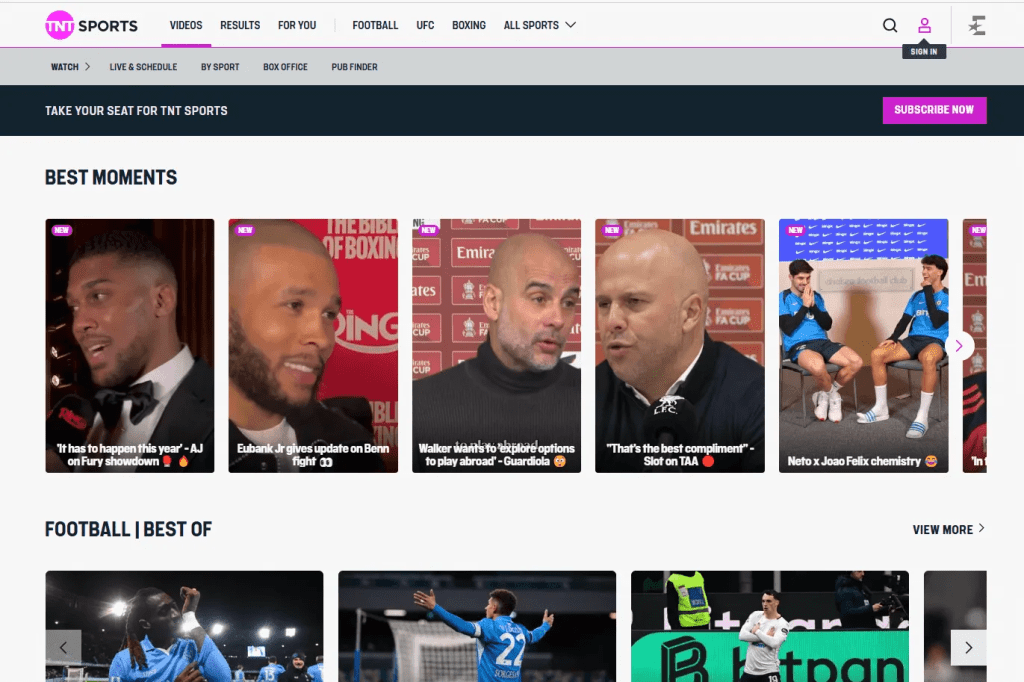
Most streaming platforms compete with originals, bingeable series, and what’s trending. Sports platforms compete with something much tougher: urgency.
When there’s a massive match, fans don’t want a highlight later. They want kickoff, commentary, pressure, crowd noise, and the moment as it happens.
That’s where TNT Sports fits. It is primarily a live-sport brand with a schedule-first mindset, and it tends to suit viewers who plan their week around big events: football nights, combat sports weekends, season-long competitions, and fixtures that feel too important to catch later.
The simplest way to understand it is this: TNT Sports is not a casual browsing app first. It is a live-event habit.
What TNT Sports Actually Is
TNT Sports is not one simple app with one fixed library. It is a sports network brand with channels, live coverage, and streaming access that is often connected through partner platforms or bundles.
Think of it like this:
- It is a rights-and-schedule business first.
- The value comes from the competitions it can show live.
- Some people access it through TV providers.
- Others access it through streaming packages.
- Its importance can change when sports rights change.
So the smartest way to judge it is not just “Is TNT Sports good?” The better questions are:
- What sports does this household actually watch?
- Which competitions are must-watch live?
- Does the current package include those events?
- Is streaming, TV-provider access, or a bundle the easiest route?
- Will the household watch often enough to justify the cost?
That keeps the decision practical instead of emotional.
Content Lineup
TNT Sports is at its best when it is the home of events viewers truly care about: the kind of events that drive group chats, pub nights, family plans, and “don’t call me during this match” energy.
The exact sports mix can change, so the value always depends on current rights. But the platform usually makes the most sense for viewers who follow live competitions rather than casual highlights.
Football and Big Match Nights
Football is often the anchor for sports subscriptions.
Many viewers keep a sports package mainly for key competitions, then justify the rest of the subscription with whatever else is included. A household might subscribe for major European nights, domestic fixtures, or specific clubs and then use the other sports as added value.
This is where TNT Sports can become important for fans who want to watch live football instead of waiting for clips. A football match is not the same after the score is already everywhere.
For some fans, the question becomes very specific: do they need a package that helps them watch Champions League live, or are they mostly interested in league football, cup matches, or another competition entirely?
That one difference can decide whether the service feels essential or optional.
Combat Sports and Weekend Events
Combat sports fans usually care about consistency.
They want:
- Clear scheduling.
- Reliable live access.
- Replays when they miss a fight.
- Easy event discovery.
- Stable playback during the main card.
- Less confusion around where the event is actually showing.
For viewers who care about fight-night energy, TNT Sports can sit in the same mental space as guides around where to watch MMA fights, boxing access, or other combat-sport packages.
The key difference is that combat fans usually don’t want to “discover something.” They already know what they came for. The platform needs to get them to the event quickly.
Motorsport, Cycling, and Follow-the-Season Sports
Season-long sports are where sports subscriptions become sticky.
Fans are not buying one match. They’re buying a rhythm:
- Qualifying.
- Race day.
- Previews.
- Recaps.
- Standings.
- Rivalries.
- Title pressure.
- Weekly or monthly habit.
That applies to motorsport, cycling, and other competitions that reward viewers for following the season properly.
For a fan who enjoys motorcycle racing or race-weekend routines, the value comes from consistency. A platform becomes more important when it supports the whole season, not just one headline event.
Rugby and Other Premium Sport Blocks
Rugby fans tend to fall into two groups.
Some are casual and only care about big internationals. Others are committed and follow club competitions, European fixtures, rivalries, and seasonal momentum.
The committed viewer gets far more value from a sports subscription because they use it repeatedly. The casual viewer may be better off subscribing only around the months that matter.
This is the pattern across sports: the more often a household watches live, the stronger the value becomes.
Why Sports Rights Matter So Much
Sports rights are the entire game.
A platform can feel essential one season and less important the next if a must-watch competition moves elsewhere. That’s why viewers should not judge any sports package like a fixed movie library.
Before keeping TNT Sports long term, a household should check:
- Which competitions are included right now.
- Whether the important events are live or replay-only.
- Which devices are supported.
- Whether access comes through a TV provider, bundle, or streaming route.
- Whether the package still matches the household’s actual sports habits.
That habit prevents disappointment.
How To Watch
Most people access TNT Sports in one of two ways.
Through a TV Provider
This suits households that already have a pay-TV package or a broadband bundle with sports add-ons.
It is often the simplest lean-back option for living-room viewing because the household may already have:
- A set-top box.
- A channel guide.
- A familiar remote.
- Bundled billing.
- Sports channels in one place.
This route works well for households that still like traditional TV behavior: switch on, find the channel, watch the match.
Through a Streaming Subscription
An app-based or streaming route suits cord-cutters, apartment viewers, students, and anyone who wants more flexibility.
This path usually makes sense when:
- People watch on multiple devices.
- The household does not want long contracts.
- Someone travels between locations.
- A viewer wants access on a phone, laptop, tablet, or smart TV.
- The household wants to subscribe for peak months and pause later.
For these viewers, a reliable TNT Sports live stream matters more than channel numbers. They want the event to load fast and stay stable until the final whistle, final bell, or final lap.
Streaming Experience
A sports streaming service lives and dies by basic reliability.
Viewers will forgive a clunky menu. They won’t forgive buffering in the 89th minute.
A good experience should feel like this:
- Fast loading into live channels.
- Stable playback on home Wi-Fi.
- Easy switching between events.
- A clear view of what is live now.
- Replays and highlights that are easy to find.
- Minimal sign-in friction on match day.
- Reliable audio and picture quality during big moments.
Where the experience can feel weaker:
- When a household expects it to behave like a normal entertainment library.
- When people want Netflix-style browsing instead of a schedule.
- When partner apps or sign-in steps make access feel complicated.
- When device limits confuse shared households.
- When a viewer only discovers access problems right before kickoff.
The best approach is to treat TNT Sports as a live sports hub, not a press-play-and-browse service.
Schedule-First Viewing
Sports fans think in fixtures, not rows of thumbnails.
That means a strong sports app should make it easy to answer:
- What is live now?
- What starts next?
- What time is kickoff?
- Which channel or stream has the event?
- Is there a replay?
- Are highlights available?
- Can I avoid spoilers and watch later?
This is one of the biggest differences between sport and entertainment. A drama series waits for the viewer. A live match does not.
Pricing Basics
Sports pricing is always moving, so the clean way to think about TNT Sports pricing is usage.
A household is paying for access to live rights. That is why sports often costs more than general entertainment subscriptions.
The value usually depends on four things:
- Must-watch competitions
If the package includes events the household truly follows, value rises quickly. - Viewing frequency
Watching once a month feels expensive. Watching several times a week feels very different. - Bundle savings
A household already paying for broadband or TV may get a better sports price through a bundle. - Rotation timing
Some viewers should subscribe only during peak months.
A practical approach works well:
- Identify the two or three competitions the household truly won’t miss.
- Subscribe during those months.
- Pause when the schedule gets quiet.
- Use highlights, radio, free coverage, or summaries when live access is not essential.
That keeps the value high and the “why are we still paying for this?” feeling low.
Who Uses It
TNT Sports tends to work best for viewers who already have clear sports habits.
It’s a strong fit for:
- Football-first households that want major match nights and a clear schedule.
- Fans who watch live and care about kickoff times.
- Viewers who prefer one place for multiple sports.
- People who split costs with family, roommates, or partners.
- Fans who follow competitions across a full season.
- Viewers who plan weekends around live events.
It’s usually a weaker fit for:
- Viewers who mostly stream movies and only occasionally watch sport.
- Households that only care about one specific competition that may be cheaper elsewhere.
- People who want a massive on-demand library more than live programming.
- Casual fans who are happy with highlights.
- Anyone who forgets to use the subscription after the big match passes.
The clearest test is simple: if sport is part of the weekly routine, TNT Sports can make sense. If sport is occasional, rotation is safer.
Key Features That Matter
Sports platforms don’t need 500 features. They need the right ones.
Multi-Device Viewing
Sports subscriptions feel more valuable when viewers can watch on a TV, then continue on a phone or tablet.
This matters in real life because not every match happens when the viewer is sitting perfectly in front of the living-room screen.
Multi-device access helps with:
- Travel.
- Work breaks.
- Shared TVs.
- Students away from home.
- Second-screen viewing.
- Households with multiple fans watching different events.
The more flexible the access feels, the easier it is to justify the subscription.
Search and Schedule Clarity
The easier it is to find what’s live and what’s coming next, the more the platform feels worth it.
Sports viewers should not have to hunt.
A good setup should make it obvious:
- Which event is live.
- Which channel has it.
- Whether a replay exists.
- What starts later.
- Which competitions are included.
- Whether highlights are available.
This matters even more for households following several sports at once.
Replay Support
Replay support matters for:
- Busy households.
- Late kickoffs.
- Fans who avoid spoilers and watch later.
- Viewers in different time zones.
- People who miss the first half.
- Weekend events that clash with work or family plans.
Replays do not fully replace live viewing, but they can protect the value of the subscription.
A fan who misses the event should still feel like the platform has their back.
Simple Account Controls
Shared households need clean controls.
That includes:
- Clear sign-in rules.
- Device management.
- Purchase restrictions if add-ons exist.
- PIN controls where available.
- Easy logout on old devices.
- Billing clarity.
Sports packages can become expensive if account settings are careless, especially on shared living-room devices.
Advantages
TNT Sports works best when it delivers the event feeling.
It Makes Big Nights Feel Big
The best sports platforms create that event atmosphere: a clear schedule, strong coverage, easy access, and a sense that the match or fight matters.
That is what sports fans are paying for.
They want the build-up, the live moment, and the reaction afterward.
It Can Replace Multiple Smaller Subscriptions
If the household watches more than one sport, a single premium sports hub can be cheaper and simpler than chasing individual competitions across several apps.
This is especially true when the viewer follows football plus another sport, or a season-long competition plus occasional fight nights.
It Supports Rotation Strategies Well
Fans can subscribe for peak months, cancel, and return.
That works because sport has natural cycles:
- League seasons.
- Tournament windows.
- Fight cards.
- Race calendars.
- Finals.
- Knockout stages.
- International breaks.
A sports subscription does not need to run all year if the household only cares about certain months.
Disadvantages
TNT Sports also has real limits.
It Can Feel Expensive if Sport Is Not Watched Weekly
Sports pricing only makes sense when the household actually uses it.
If a viewer only watches one or two events a month, the package can quickly feel like the first subscription to cut.
The Value Depends on Rights
If a viewer’s must-watch competitions move elsewhere, the platform becomes less essential overnight.
That is why sports subscriptions need regular checking.
The best question is not “Did we use this last year?” It is “Does it still carry what we care about now?”
It’s Not Built for Casual Browsing
People who want to press play and discover something may not enjoy a schedule-driven service.
Sports fans usually know why they opened the app. Casual entertainment viewers may feel like there isn’t enough to browse.
That is not a flaw. It is the nature of live sports.
Safety, Privacy, and Household Controls
TNT Sports itself isn’t inherently risky, but shared households should treat any paid streaming account like a mini-billing system.
Smart setup checklist:
- Use a strong password and don’t reuse it.
- Enable purchase restrictions or PINs where available.
- Keep profiles or account access separate when possible.
- Log out of devices you no longer use.
- Avoid signing in on public or shared TVs unless necessary.
- Keep apps and device software updated.
- Check billing if subscribing through a third-party store.
For sports specifically, one extra habit helps: avoid sketchy free-stream links.
Those are where malware, pop-ups, fake login pages, and account theft usually become a problem. Legitimate access is boring, but boring is exactly what viewers want on match day.
Best Alternatives
The best alternative depends on what the viewer actually wants: football, fight nights, live channels, a cheaper short-term pass, or a broader TV package.
TNT Sports vs Sky Sports or NOW Sports
Sky Sports and NOW-style sports access can be strong alternatives for UK viewers, depending on which competitions matter most.
This comparison is usually about rights, not brand loyalty.
A football fan might compare TNT Sports with Sky Sports based on Premier League, European competitions, domestic cups, or the specific match nights they care about. If the main question is where to watch Premier League, the viewer should follow the rights first, not the logo.
NOW-style access can also suit viewers who want shorter commitment without a full TV package.
TNT Sports vs DAZN
DAZN-style access can be a better fit for fight fans or niche sports viewers, depending on regional rights.
If the viewer mostly cares about boxing, MMA, or combat-sport events, they should compare the actual fight schedule before choosing.
A fan who only wants combat nights may not need a broader sports package if a fight-focused platform covers the events they care about.
TNT Sports vs Amazon Event Coverage
Amazon-style event coverage can make sense when it holds specific sports packages or headline match windows.
This is usually best for viewers who only want a few events and do not want another full monthly sports bill.
The weakness is consistency. If the viewer wants a season-long sports habit, event-based coverage may not be enough.
TNT Sports vs Free-to-Air and Highlights
For casual sports fans, the cheapest setup is often a free-to-air plus highlights approach.
That can mean:
- Watching free matches when available.
- Using official highlight channels.
- Following live text updates.
- Listening to radio coverage.
- Subscribing only for peak months.
- Using match replays where legally available.
This works for casual fans, but it rarely satisfies viewers who care about live atmosphere.
TNT Sports vs Eurosport-Style Coverage
Eurosport-style coverage can be a better fit for viewers who care more about cycling, tennis, winter sports, Olympic-style events, or specialist competitions.
TNT Sports may be the better fit when the viewer wants football, fight nights, and premium live-event blocks. The better choice depends on which calendar the household actually follows.
Alternatives by Viewing Need
If the goal is football-first viewing, compare:
- TNT Sports.
- Sky Sports.
- NOW Sports-style passes.
- Amazon event coverage where relevant.
- Free-to-air matches where available.
If the goal is combat sports, compare:
- TNT Sports.
- DAZN.
- UFC-focused access.
- Boxing-specific platforms.
- Event-by-event purchase options.
If the goal is full live-TV sports coverage, compare:
- TV-provider sports bundles.
- App-based sports subscriptions.
- Regional live-TV services.
- Channel packages with the competitions the household watches.
If the goal is casual sports catch-up, compare:
- Official highlights.
- Free-to-air coverage.
- Radio and live text.
- Short-term passes during peak months.
The smartest alternative is the one that matches the viewer’s actual watch pattern, not the one that sounds best on paper.l watch pattern, not the one that sounds best on paper.
FAQs
1) Is TNT Sports a normal streaming service with a big library?
No. It’s primarily a live sports network and schedule-based service. The value comes from live events, coverage, and rights.
2) Does TNT Sports work without a TV package?
In many cases, yes — viewers can access it through streaming subscriptions depending on region and platform options.
3) Is TNT Sports worth it for casual sports viewers?
Usually only during peak months or major tournaments. Casual viewers often get better value by rotating subscriptions.
4) What kind of viewer gets the most value from it?
Fans who watch live sports weekly and follow specific competitions consistently.
5) Can TNT Sports replace all sports streaming needs?
Not always. Sports rights are split across providers, so some households still need a second service for certain competitions.
6) Is it good for families?
It can be, if multiple people watch sport regularly. If only one person watches, it depends on how often they use it.
7) Does it support watching on multiple devices?
Typically yes, though device rules and simultaneous streams depend on the plan and platform used.
8) What’s the biggest downside for most people?
Cost versus usage. If the household doesn’t watch often, it starts to feel like a waste.
9) Is it easy to cancel and re-subscribe later?
Usually yes for streaming subscriptions. That’s why a rotation strategy works so well for many households.
10) How should viewers decide if they should subscribe?
List the must-watch competitions, check where they’re shown in the viewer’s region, then choose the cheapest path to access them.
11) Can viewers share one account with a household?
Often yes, but the number of supported devices and streams depends on the plan rules.
12) Who should skip TNT Sports?
People who rarely watch live sport, or who only care about a competition that’s cheaper through a different provider.
13) What’s the fastest way to get value quickly?
Subscribe during a high-value month, build a watch routine around live events, and use replays when schedules clash.
14) Is it more for football fans or multi-sport fans?
It works for both, but multi-sport fans typically get better value because they use the subscription more often.
15) What’s the best mindset to use it properly?
Treat it like a live sports hub. Plan what to watch, don’t expect a Netflix-style browsing experience, and rotate when needed.
Final Verdict
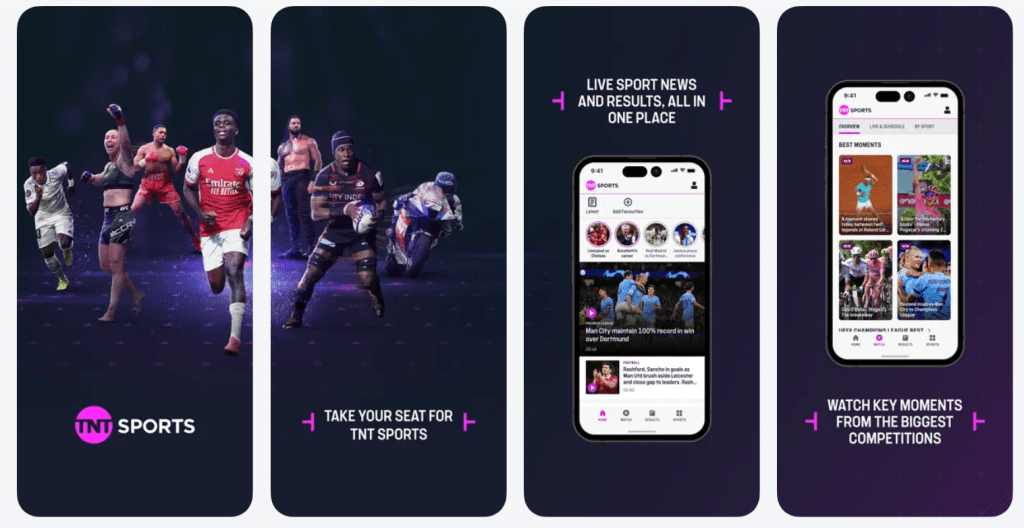
TNT Sports is a strong option for viewers who care about live sport enough to treat it as a weekly habit, not an occasional extra. When the household follows the right competitions and uses a smart subscription strategy, it feels premium for a reason. When the household watches sport only once in a while, it can feel like an expensive button that barely gets pressed.
For the ForeverWatch streaming lineup, TNT Sports makes the most sense as the dedicated “big match and live events” platform — the one that earns its place when the calendar is full and the household wants the real thing, live.