
beIN Sports sits at the center of a modern sports reality: premium football is rarely in one place anymore, and the “right” service depends on region, rights, and how a person actually watches. In some markets it’s a traditional TV channel bundle. In others it’s a standalone streaming subscription. And in many cases, it’s both. The smartest way to approach beIN Sports is to treat it like a rights-and-access puzzle—solve the access method first, then judge the value.
Overview
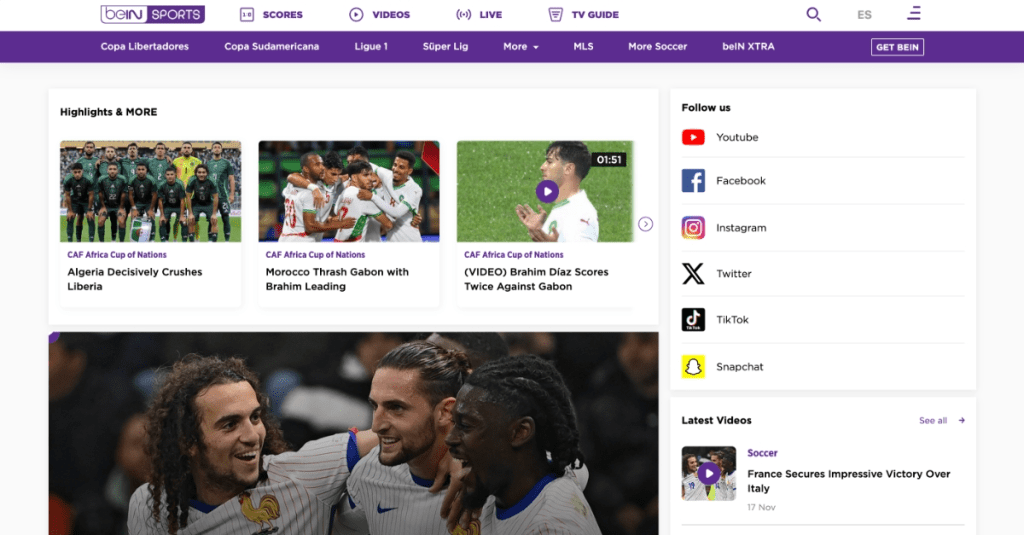
beIN Sports is a global sports network best known for football coverage, with variations in channel lineups, rights, and streaming products depending on country. The brand exists across multiple regions and business models:
- Pay TV channels (via cable/satellite or live TV streaming bundles)
- Direct-to-consumer streaming (through beIN-branded apps/services in select markets)
- Free ad-supported options in some countries (limited programming compared to paid access)
What makes beIN Sports stand out is focus. It’s not trying to be “everything sports” in the way some mega-bundles do. It’s typically strongest where it can lock in specific football leagues, cups, and shoulder programming (highlights, analysis, studio shows), then package that into either channels or an OTT streaming offer.
What beIN Sports includes
The easiest way to think about beIN Sports content is in four layers:
- Live matches
The core product. League matches, cup ties, and tournament windows are the real value driver. - Match replays and condensed games
Useful for viewers outside the match’s time zone or anyone who wants “watchable catch-up” rather than full 90 minutes. - Highlights, news, and studio analysis
The daily glue that keeps the service relevant between matchdays. - Extra sports (market-dependent)
Depending on region, schedules can include additional sports categories beyond football. This varies heavily by country and licensing strategy.
A key point: beIN Sports is not a single universal library. Content can differ by country and even by the same product name in different markets. That “same logo, different rights” reality is why a practical review has to keep repeating one phrase: availability depends on region.
Streaming products
beIN Sports is often accessed through a streaming layer, but the naming can confuse people because “CONNECT” shows up in multiple regions.
How it typically breaks down:
- beIN SPORTS CONNECT is commonly positioned as a paid streaming service in certain markets, usually geo-restricted to the signup country.
- beIN CONNECT is a separate beIN-branded streaming concept used in other regions, often tied to a broader package ecosystem.
Geo rules matter more than people expect. In some markets, subscribers are expected to use the service only within the country where signup happened. That changes how useful it is for frequent travelers.
Device compatibility and casting
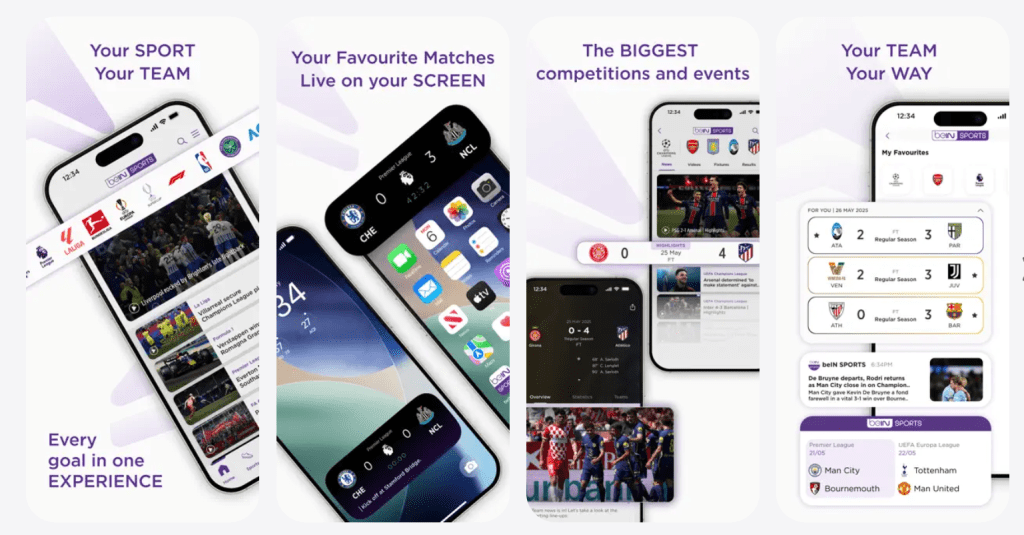
In practice, beIN Sports lives or dies on device support. Fans don’t just “have” a subscription. They have habits: living-room TV for big matches, phone for commute highlights, laptop for late-night matches, and casting for social viewing.
Depending on region and plan, supported device categories often include:
- iOS and Android mobile/tablet apps
- Web viewing through supported browsers
- Smart TV apps in select ecosystems
- Streaming devices (including Android TV in many setups)
- Casting options such as Chromecast and AirPlay (where supported)
That mix matters because it affects friction. The best sports subscription is the one that launches quickly, buffers less, and doesn’t turn “match kickoff” into troubleshooting time.
Pricing and ways to get beIN Sports legally
Pricing varies by country and by the access route (standalone streaming vs add-on channel pack). The most useful way to review beIN Sports pricing is to compare paths, not just numbers.
Path 1: Direct beIN streaming subscription (where offered)
In some regions, beIN Sports can be purchased as a direct streaming subscription, billed monthly, without needing a cable plan.
This path works best for:
- Viewers who don’t want a larger live TV bundle
- People who mainly watch the leagues beIN carries in that region
- Anyone who wants a single-purpose sports subscription
Path 2: Add-on through a live TV streaming platform
In some countries, beIN Sports is available via a “soccer pass” or sports add-on inside a larger streaming TV service.
This path works best for:
- People who already use a live TV streaming service
- Fans who want one “home base” app for multiple sports channels
- Viewers who prefer a guide-like experience rather than a standalone sports app
Path 3: Add-on via sports bundles
Some platforms sell beIN Sports as a low-cost add-on, usually alongside channel bundles and DVR features.
This path works best for:
- Households that already use a broader live sports bundle
- Fans who want multiple channels plus DVR features in one platform
Path 4: Free, limited programming (where offered)
In some markets, beIN Sports content can appear on free ad-supported channels or FAST services. The schedule is typically more limited than the paid channel feeds, but it can still be useful.
This path works best for:
- Casual viewers who want occasional matches or highlights
- Fans testing the ecosystem before paying
- People who can accept limited schedules compared to paid access
Bottom line on pricing: beIN Sports can be excellent value if the right access method exists in the viewer’s country and the viewer’s must-watch competitions are actually on beIN there.
User base
beIN Sports tends to attract a specific kind of viewer:
- Football-first fans who follow leagues that beIN holds in their market
- Value hunters who want key competitions without a massive cable bill
- Schedule-driven viewers who plan around match windows and tournaments
- International-league followers who prefer European and regional football ecosystems
A useful mental test is simple:
- If the viewer’s “must watch” list is heavy on competitions carried by beIN Sports in that country, it’s often a strong buy.
- If the viewer’s list is spread across many rights-holders, beIN Sports becomes one piece in a bigger subscription stack.
Key advantages
beIN Sports has a few consistent strengths across markets.
1) Strong football identity
Some sports platforms feel like a generic bundle. beIN Sports typically feels like it’s built for football fans first. That shows up in match volume, studio coverage, and the way programming fills gaps between big fixtures.
2) Flexible ways to subscribe (in some countries)
The ability to get beIN Sports via:
- standalone streaming, or
- a channel add-on, or
- a broader live TV package
…gives consumers options, especially if price sensitivity matters.
3) Value can be excellent when beIN is a “specialist add-on”
When beIN Sports is available as a relatively small add-on, the cost-to-content ratio can be surprisingly good—especially for fans who only care about the leagues beIN carries.
4) Rights continuity can build “habit viewing”
When beIN renews or extends rights in a region, it reduces churn because fans can build weekly routines around the same app/channel.
Key disadvantages
No serious beIN Sports review is complete without the trade-offs.
1) Rights fragmentation still exists
Even if beIN Sports is strong, it may not cover every major competition a fan wants. The result is subscription stacking: one service for one league, another for a different league, and maybe a third for European competitions.
2) Regional differences can confuse users
The beIN Sports name is global, but the experience is local. Apps, packages, supported devices, and even “what’s included” can shift between countries. That can make online advice messy because a tip that works in one market can be useless in another.
3) Geo-restrictions can be limiting
Some regions limit viewing to the signup country, which matters for frequent travelers.
4) Not always the best “one app” solution
If a household wants one platform for everything—sports, entertainment, local channels—beIN Sports alone usually won’t satisfy that. It’s more often a specialist layer than a full replacement.
Safety, privacy, and account hygiene
“Safety” for a sports streaming service is less about physical risk and more about avoiding scams, protecting accounts, and staying on the legal path.
Practical safety checklist:
- Stick to official apps and authorized distributors.
- Use strong, unique passwords for the account tied to billing.
- Avoid credential sharing beyond the platform’s rules.
- Monitor email and payment alerts for unexpected renewals or login attempts.
- Be careful with “too good to be true” deals sold via unofficial resellers.
Legal safety matters too. If a match is geo-blocked in a region, it’s usually because a different broadcaster owns rights there. Choosing a legitimate local option keeps viewing stable and reduces the risk of streams disappearing mid-match.
beIN Sports alternatives
The best alternatives depend on what the viewer is trying to watch. Instead of treating “competitors” as identical, it’s better to compare by use-case.
Alternative set A: Broad sports streaming ecosystems
These services aim to be wide and often include multiple sports categories, sometimes with local channels and DVR features.
Who should choose this: viewers who want one bill and one main app for many channels.
Alternative set B: Football-focused or region-focused services
These tend to win on depth in a specific region, language, or league set.
Who should choose this: viewers who follow specific leagues and want a cleaner, cheaper solution than a giant bundle.
Alternative set C: Free ad-supported sports channels
Free options can be good for highlights and select events but are rarely complete replacements for full match coverage.
Who should choose this: casual viewers who don’t need every match live.
Where beIN Sports fits best: as a specialist football layer—especially when it carries the viewer’s priority competitions in that market.
Step-by-step: how to decide if beIN Sports is worth it
A practical decision process keeps this simple.
Step 1: List the “must-watch” competitions
Only must-watch. Not “nice to have.”
Step 2: Identify who owns those rights in the viewer’s country
This is where many people waste money. A service can be excellent and still irrelevant if it doesn’t hold the rights locally.
Step 3: Choose the cheapest legitimate access path
- Standalone subscription (if available and sufficient)
- Add-on pack (if cheaper)
- Larger bundle only if the household also needs other channels
Step 4: Confirm device fit
If the main TV platform isn’t supported, frustration will kill the value.
Step 5: Re-check after big rights changes
Sports rights shift. A good setup this season can be a bad setup next season.
FAQ
Is beIN Sports the same in every country?
No. beIN Sports is a global brand, but content, pricing, and apps vary by region because rights are licensed market-by-market.
Does beIN Sports include football only?
It is football-forward in many markets, but schedules can include other sports depending on local programming strategy.
Can beIN Sports be watched without cable?
In some countries, yes—either via a standalone streaming service or via live TV streaming bundles/add-ons. Some markets also have limited free ad-supported options.
Is beIN SPORTS CONNECT available everywhere?
No. Availability depends on region and licensing.
Can beIN Sports be used while traveling?
Some markets restrict usage to the signup country. Travelers should check regional terms before subscribing.
What devices work best with beIN streaming?
A stable living-room device (smart TV or streaming box) plus a mobile device as backup usually delivers the best experience.
Is beIN Sports good for casual viewers?
It can be, but only if the casual viewer’s favorite competitions are actually on beIN Sports in that country. Otherwise, a broader bundle may be simpler.
Is beIN Sports worth it for hardcore football fans?
Often yes—when it carries the leagues the fan prioritizes locally. If the fan follows many leagues across multiple rights-holders, beIN Sports becomes one subscription among several.
How can someone get it cheaply?
The cheapest legitimate option is often an add-on pack when available. Standalone subscriptions can also be cost-effective in some regions.
Does it have replays?
Many markets include replay and highlight programming, but the exact catalog depends on rights and the product in that region.
Can multiple people stream beIN Sports at the same time?
Concurrency rules vary by provider and plan. Standalone streaming plans and live TV bundles often have different limits.
What is the biggest downside of beIN Sports?
The biggest downside is usually rights fragmentation and regional differences. A user can pay for beIN Sports and still miss key competitions if those rights live elsewhere.
Is a free stream safer than paying?
Only if it’s an official free option. Unofficial “free streams” are high-risk for scams, malware, and unstable viewing.
How often do beIN Sports rights change?
Rights change by competition and cycle. Viewers should re-check availability when seasons roll over or packages update.
Final verdict
beIN Sports is best understood as a specialist football service whose value depends on one thing: whether it owns the competitions a viewer cares about in that viewer’s country. When the rights line up, beIN Sports can be strong value—especially if it’s available as a clean standalone plan or a low-cost add-on. When the rights don’t line up, even the best beIN Sports package becomes a frustrating “almost,” and a different local broadcaster or broader bundle will be the smarter move.