Fandor is made for viewers who open a streaming app, scroll for ten minutes, and still feel like nothing looks worth watching. Instead of trying to be “everything,” Fandor goes curated: indie films, international cinema, documentaries, classics, and under-the-radar picks that feel chosen on purpose.
That positioning matters because many people judge streaming services by one thing—catalog size. But Fandor doesn’t win on raw volume. It wins on taste. The goal is to make movie night feel intentional again, like picking something from a film-festival shelf instead of digging through a warehouse.
Used the right way, Fandor becomes the “trust this app” option in a household. Not always the daily driver, but the one opened when the viewer wants something different that still feels high-quality.
Who This Fits Best (And Who Should Skip It)
This kind of platform usually clicks for viewers who:
- Prefer indie films, international cinema, documentaries, and classics
- Like being guided by collections and themes
- Want discovery that feels human, not purely algorithmic
- Watch movies more than bingeing long series
It’s usually a weaker match for viewers who:
- Only watch big franchise releases and current mainstream hits
- Want one service to replace everything else
- Mostly watch long, popular TV series rather than films
- Get annoyed when titles rotate in and out due to licensing
If a household already enjoys services like Criterion Channel or MUBI, the experience will feel familiar. If the household mainly wants blockbuster TV and major trending titles, it will feel niche.
Library & Content: What Viewers Can Expect
Fandor tends to lean into:
- Independent features (newer and older)
- International films that don’t always appear on mainstream apps
- Documentary picks that feel curated rather than randomly dumped in
- Cult discoveries and genre-adjacent gems
- Film-history style browsing: directors, movements, themes, influences
The main strength here is consistency. Even if a viewer doesn’t love every title, the selection usually feels like it has a point of view. That helps discovery, because the viewer learns what the platform is “about.”
The main limitation is also clear: a viewer shouldn’t expect every trending title they saw online yesterday. Licensing changes over time, so it’s best treated like a curated film channel—strong identity, rotating availability.
Features That Matter in Real Life
The best niche film services reduce friction. The features that typically matter most:
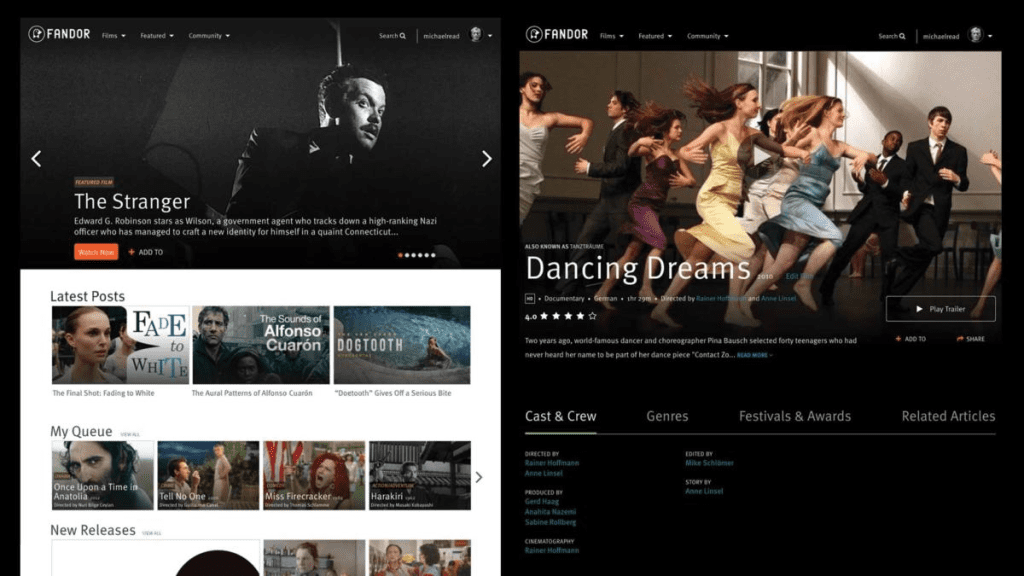
Curated collections
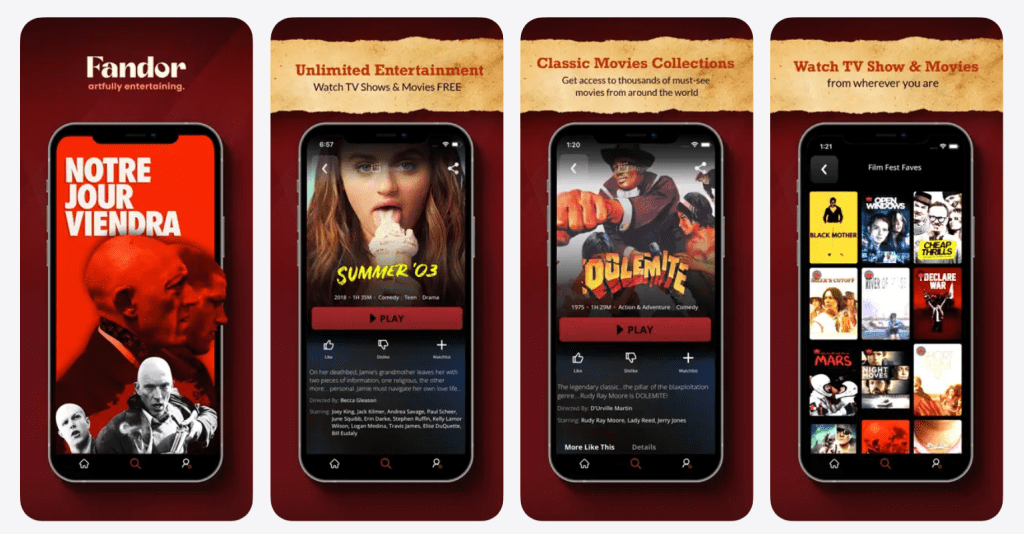
Instead of one endless wall, the content is often organized into themes that make choosing faster—moods, genres, movements, director spotlights, and seasonal lists.
Discovery that doesn’t feel random
When recommendations are tied to curation and collections, it feels less like “because you watched X” and more like “here’s something that matches your taste.”
Watchlist behavior
A good watchlist is the difference between “browse forever” and “press play.” This platform works best when the viewer saves a short list of films and returns later to watch.
Cross-device access
A service only becomes a habit if it’s easy to open on the household’s main TV setup, not just on a phone or laptop.
Pricing: What It Usually Costs
Fandor is typically positioned as an affordable add-on subscription rather than a premium “everything bundle.” Pricing, promos, and trials can change over time (and vary by region), but the general idea stays the same: it’s meant to be low-friction for film fans who want a curated library.
Practical rule: if a household watches a couple of carefully chosen movies per month from this catalog, the subscription tends to justify itself.
Devices & Availability: Where It Works
Most viewers want this experience on a TV. That’s where film nights happen. Availability can vary by region and device ecosystem, but access is commonly offered through a web option and major streaming-device environments.
Quick tip: if two niche services look similar, the better one is often the one that’s easiest to open on the household’s living-room device. Convenience wins more nights than “perfect catalog” on paper.
User Experience: How It Feels Day-to-Day
The overall vibe is calmer than mainstream platforms. It’s less “feed,” more “shelf.” That matters because film fans often want guidance, not noise.
A common viewing pattern looks like this:
- Viewer opens the app with no specific title in mind
- Viewer checks curated rows/collections for a few minutes
- Viewer saves a few options to a watchlist
- Viewer watches one film that feels like a real pick
That’s a different use case from bingeing a ten-episode series. For viewers who want fast, deliberate movie picks, this setup works extremely well.
Advantages: Where It Wins
1) Faster decisions
The structure makes it easier to choose a film without getting stuck in endless scrolling.
2) Better discovery
Viewers often find movies they wouldn’t have searched for—because they didn’t know they existed.
3) Strong identity
Many services feel like a random pile of content. This one typically feels curated, and that consistency builds trust.
4) Great for “movie night” households
When the goal is a solid film (not a binge), the platform fits that moment.
Disadvantages: Where It Can Frustrate People
1) Not a mainstream replacement
It’s not designed to cover every big hit or trending franchise.
2) Rotating availability
A viewer might save a title and later discover it’s no longer available due to licensing changes.
3) Series-first households may feel under-served
If the household mainly watches multi-season shows, it can feel too film-centric.
4) Curation can feel narrow
Some people want maximum variety. Here, the personality is the point—so it won’t match every taste.
Safety & Privacy: What Viewers Should Know
This is generally a standard subscription streaming setup. “Safety” is mostly about household controls and account hygiene.
Account basics
- Use a strong password and don’t reuse it across services
- Avoid sharing logins widely (it becomes messy fast)
- Enable device-level purchase controls where possible
Kids and age-appropriate viewing
- Curated film libraries can include mature themes
- Parents should treat the catalog like an adult movie shelf unless profiles/controls are set up
Payments
- If the TV is shared, enable purchase PINs or restrictions at the device store level
Comparisons: How It Stacks Up Against Alternatives
Sometimes the fastest way to choose is to compare “personality,” not features.
Vs Criterion Channel
Criterion often feels like a deep classic-cinema vault with strong prestige programming. This platform can feel broader and more discovery-driven, with a slightly lighter barrier to entry.
Vs MUBI
MUBI can feel tighter and more rotation-focused. This service often feels more library-like while still curated. If a viewer wants a wider shelf, this may be the better fit.
Vs Kanopy
Kanopy is fantastic if a viewer has library/university access. If not, a paid curated service becomes the simple, reliable alternative.
Vs Sundance Now
Sundance Now tends to appeal to viewers who want indie-leaning series and curated picks. A film-first viewer may prefer this platform’s movie-heavy emphasis.
Vs Shudder
Shudder is horror-first with a strong genre identity. This service is broader and not locked into a single lane.
How to Get the Best Experience Quickly
Many people test a streaming app the wrong way—scroll once, quit, judge forever. A better setup routine:
- Start with collections, not search
Search is for a specific title. Collections are for discovery, and this platform is built for that. - Build a watchlist of 15–25 films
This turns browsing into a one-time activity instead of a nightly problem. - Pick a weekly theme
Documentaries this week. International next week. Classics the week after. It becomes fun fast. - Stop comparing it to mega-catalog services
Treat it like a curated cinema channel and it feels valuable. Treat it like a blockbuster vault and it feels small.
FAQs
1) Is Fandor like Netflix?
No. It’s a niche, curated film service focused on discovery rather than mainstream volume.
2) What kind of movies are common here?
Indie films, international cinema, documentaries, classics, and lesser-known gems tend to show up most often.
3) Does it usually offer a free trial?
Trials and promos can change. The best approach is to check the current sign-up offer in the app or on the site.
4) Can it replace multiple subscriptions?
Usually not. It’s best as an add-on for film lovers, not a one-service solution.
5) Is it good for families?
It can be, but parents should manage access because curated film libraries can include mature themes.
6) Does it work on a TV?
In many setups, yes—either through a TV app, streaming device, or a web-based option depending on region.
7) Is it better than Criterion Channel?
They’re different. Criterion is often best for deep classics and Criterion-brand programming. This service can feel more discovery-driven and wide-ranging.
8) Is it better than MUBI?
It depends. MUBI can feel tighter and more rotation-centered. This service can feel more like a curated library.
9) Will movies stay available forever?
No. Like most streaming services, licensing changes over time, so some titles rotate in and out.
10) Does it have ads?
Ad experiences can vary by plan and platform rules. Subscription setups are usually the cleanest experience.
11) Is it worth it for mainstream-only viewers?
Probably not. It’s designed for people who actively want indie and international options.
12) What’s the fastest way to enjoy it?
Browse collections, build a watchlist, and commit to one film night. It clicks when the viewer stops scrolling and starts watching.
13) Who should skip it entirely?
People who only want blockbuster hits, trending series, and franchise-first catalogs will usually get more value elsewhere.
Final Verdict
Fandor is a strong choice for viewers who want better movie nights, not bigger menus. It won’t replace mainstream subscriptions—and it’s not trying to. The real value is curation: less chaos, fewer bad picks, and more films that feel like they were selected with intention.
For indie and international film fans, Fandor can be a smart, affordable add-on that earns its spot in the streaming lineup.