
Funimation was once one of the most recognizable names in anime streaming, especially for viewers who wanted a dedicated anime-first service instead of digging through a broader entertainment app. Today, though, it is no longer a standalone platform in the practical sense. Crunchyroll states that it said goodbye to the Funimation app and website on April 2, 2024, after the broader consolidation of Sony’s anime streaming business.
That changes the way this topic should be handled in search content. A current article on this keyword should not pretend Funimation is still a live, normal streaming subscription. It should explain what the service was, why it mattered, what happened to it, and what viewers should use now if they are looking for the same kind of anime-focused experience.
Last Updated: March 2026
How This Funimation Review Was Evaluated:
- Current service status and whether the platform is still usable as a standalone option
- Practical value for new users searching for an anime streaming service today
- Account migration, billing, and support implications for former subscribers
- Library continuity and how much of the old catalog appears to have moved elsewhere
- Ease of use for mobile, desktop, and everyday streaming decisions
- Trust, reliability, and whether the keyword still represents an active product
- Overall usefulness for readers deciding between legacy and current anime platforms
What Is Funimation?
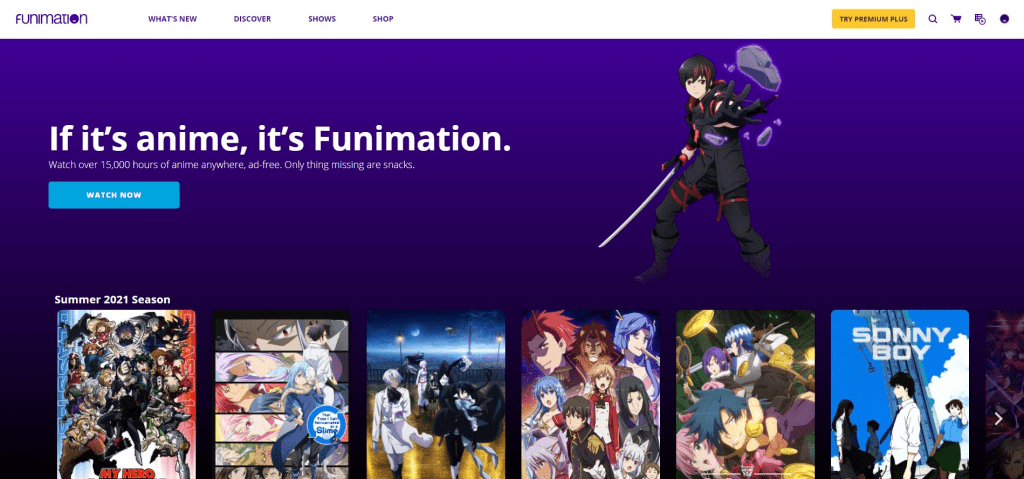
Funimation is a former anime-focused streaming brand that was folded into Crunchyroll after Sony combined its major anime streaming businesses. In plain English, it is no longer the main destination users should sign up for if they want a current anime streaming subscription. It is now better understood as a legacy brand with historical importance in anime distribution and dubbing, rather than a fully active standalone service.
This matters because search intent around this keyword is often split in two. Some readers want to know whether the service still exists. Others remember the brand and want the closest modern replacement. A strong article should answer both: Funimation still matters as a name, but the standalone platform itself has ended.
Historically, Funimation built a loyal audience by offering a focused anime experience instead of trying to be a general streaming giant. That anime-first positioning is exactly why the keyword still gets attention: people are often not just searching for a brand, but for a type of viewing experience built around anime as the core product, not a side category.
How Funimation Works
For new users, the most accurate answer is simple: Funimation does not work as a normal, fresh sign-up platform anymore because its app and website were shut down. That means readers looking to start watching through “Funimation” need to shift their attention to the platform that absorbed it rather than treating this as a live independent subscription.
For former subscribers, the situation is more specific. Crunchyroll says Funimation subscriptions were transferred into Crunchyroll, though the exact outcome can vary depending on region, payment platform, and subscription type. That means the keyword still has practical relevance for past users dealing with billing, login, or support questions.
Crunchyroll also notes that watch history migration from Funimation is no longer available. In addition, users who already accessed Crunchyroll using their Funimation credentials can remain unaffected, while the old credential pathway for users who never used it is set to be discontinued. So the current “how it works” story is less about streaming through Funimation itself and more about how former Funimation users are handled inside Crunchyroll’s system.
That distinction is crucial for SEO. A weak article treats Funimation like an active app. A strong one explains that the real user journey now is migration, account cleanup, and choosing the best active anime platform after the brand transition.
Key Features and Standout Tools
The legacy appeal of Funimation was strongly tied to dubbed anime. Even now, old app-store descriptions for the service still reflect that positioning by emphasizing a large English-dubbed anime library alongside subtitled shows. That dub-first identity is a major reason the brand still has recognition, especially among viewers who prefer English audio over subtitles.
In practical terms, however, former users no longer interact with a living Funimation feature set. The active feature environment now sits under Crunchyroll, which highlights things like multiple profiles for premium users, simulcast access, offline viewing on higher tiers, multi-device streaming, and watchlists. So when readers ask what features “Funimation” offers today, the honest answer is that the active toolset has effectively moved into Crunchyroll.
That means the keyword still has value, but mostly as a legacy shortcut. It signals interest in anime-first streaming, dubbing, and a focused catalog experience. It does not signal a fully separate, current feature roadmap under the Funimation name anymore.
Is Funimation Still Reliable or Trustworthy?
If the question is whether Funimation was a legitimate brand, the answer is yes. It was a mainstream name in anime distribution and streaming, and its transition happened through an official consolidation under Crunchyroll rather than through some suspicious or abrupt disappearance.
If the question is whether Funimation is reliable as a current standalone streaming choice, the answer is no. A user should not treat it as an active independent service to sign up for today, because the app and website were officially closed. That makes it unsuitable as a primary recommendation for new streaming subscribers, even though the brand still carries recognition.
So the best way to frame trust is this: the brand itself is not the problem; the platform’s lifecycle is. It is trustworthy as part of anime streaming history, but not a practical standalone destination for present-day viewing decisions.
Pricing, Payments, and Subscription Structure
Funimation does not function as a standard standalone subscription offer anymore, so a new reader should not expect a normal current pricing page, fresh plan tiers, or a typical sign-up funnel under that brand. For most practical purposes, pricing questions now point to Crunchyroll or to alternative active services.
For legacy users, Crunchyroll says former Funimation subscriptions were automatically transferred, with billing continuing through Crunchyroll’s cycle or through the user’s third-party payment platform, depending on how the account was originally billed. Crunchyroll also states that pricing outcomes may vary by region, payment platform, and legacy plan type.
Refunds are still a relevant topic. Crunchyroll says users can contact support to check refund options based on payment method, and annual members who cancel may receive a refund for the remaining premium period. It also provides a support path for users who believe they are still seeing old Funimation-linked charges after cancellation.
This is why exact price claims should be handled carefully in content. The safer and more useful angle is not to guess at current numbers, but to explain that Funimation pricing is no longer the central issue. The real issue is migrated billing, support follow-up, and checking the currently active platform’s plans directly before subscribing.
User Experience
For someone discovering the keyword today, the user experience is mostly informational rather than transactional. The average reader is no longer deciding whether to download Funimation and start a fresh subscription. Instead, they are trying to understand what happened, whether their old access still matters, and where the anime experience they wanted actually lives now.
For former users, the experience can still involve login questions, leftover billing concerns, and content expectations. Crunchyroll says most of the Funimation catalog has already been migrated, but it does not claim everything is there. That means the current experience is better described as a transition with substantial continuity, not a perfect one-to-one mirror of the old platform.
There is also friction around what was lost. Crunchyroll explicitly says it does not currently support Funimation digital copies, which makes this keyword especially sensitive for users who tied purchases or redeemed content to the old ecosystem. For those readers, the experience is not just about streaming convenience. It is about lost continuity and managing expectations.
From a usability angle, the best content on this topic should acknowledge all three realities at once: Funimation was valuable, the service ended, and the user journey now points elsewhere. That balance makes the article useful instead of nostalgic or misleading.
Pros and Cons
The biggest strength of this keyword is legacy relevance. Funimation still means something to anime viewers because it represented a dedicated anime brand, a dub-friendly identity, and a focused viewing experience that many users still remember fondly.
Another positive is that former subscribers were not simply abandoned without a direction. Crunchyroll says most of the content has already been migrated, and subscription transfer paths were built into the consolidation process, which gives many past users a practical continuation point.
The downside is obvious but essential: the standalone service is gone. That immediately weakens Funimation as a current recommendation for new users, because it no longer works as an independent streaming decision.
There are also specific pain points. Watch history migration is no longer available, and Crunchyroll says it does not currently support Funimation digital copies. On top of that, transferred billing can feel messy for users who expected a clean break.
So the practical summary is straightforward: strong legacy, weak present-day independence. That makes Funimation a good topic for explanation, but a poor direct recommendation as a fresh standalone subscription.
Funimation vs Alternatives
The closest modern replacement is Crunchyroll. That is not just a general recommendation—it is the direct successor path because Crunchyroll says most Funimation content has already moved there, and Sony describes the two services as having been merged under one anime destination strategy.
For viewers who want another anime-first platform instead of the direct successor, HIDIVE is the clearest secondary option. Its own site presents it as an anime streaming service built around simulcasts, dubs, and deeper cuts, which makes it the most natural “specialist” alternative when someone wants a focused anime environment rather than a broad mainstream catalog.
For households that want anime as one category inside a broader entertainment bundle, Netflix and Hulu make more sense. Netflix describes itself as a streaming service for TV shows, movies, anime, and documentaries, while Hulu positions itself around a large TV-and-movie library. These are usually better for mixed-viewing homes than for viewers who want anime to be the core experience.
That creates a simple decision tree. If the reader wants the nearest continuation of the old Funimation path, point them to Crunchyroll. If they want another anime-first service, HIDIVE makes sense. If they want general entertainment with some anime included, broader platforms are usually the better fit.
Comparison Table: Funimation vs Other Platforms
| Platform | Best For | Free Version |
Moderation | Key Advantage |
|---|---|---|---|---|
| Funimation | Legacy users researching old accounts or the shutdown | Standalone signup no longer available | Strong anime brand legacy and dub recognition | Not an active standalone service |
| Crunchyroll | Former Funimation users and anime-first viewers | Current plans vary by region and promotions | Direct successor path with most migrated content | Not every former title or past user benefit is guaranteed |
| HIDIVE | Viewers who want another anime-focused platform | Paid service; availability can vary | Specialist anime positioning with simulcasts and dubs | Smaller general brand footprint than Crunchyroll |
| Netflix | Mixed households wanting anime plus broad entertainment | Paid plans | Wide overall streaming value beyond anime | Anime is not the sole focus |
| Hulu | Users who want TV, movies, and some anime in one place | Paid plans | Broad streaming library and flexible mainstream appeal | Less anime-specialized than dedicated services |
The main takeaway from the table is that Funimation now belongs in the “legacy research” lane, not the “best active subscription” lane. For current viewing, the decision is really about which active replacement matches the user’s habits best.
FAQs: Funimation
Is Funimation still available?
No. Crunchyroll says the Funimation app and website were closed on April 2, 2024, so it is no longer available as a normal standalone streaming platform.
Can new users still subscribe to Funimation?
As a practical matter, no. New users should treat this as a legacy keyword and look at active alternatives instead of trying to start a fresh standalone Funimation subscription.
What replaced Funimation?
Crunchyroll is the direct replacement path because Sony merged the services and Crunchyroll says most of the Funimation catalog has already been migrated there.
Is all Funimation content on Crunchyroll now?
Not necessarily. Crunchyroll says most of the content has already been migrated, which is helpful, but that wording also means readers should not assume every single title transferred.
Can former users still move their watch history?
No. Crunchyroll says watch history migration from Funimation to Crunchyroll is no longer available.
What happened to Funimation digital copies?
Crunchyroll says it does not currently support Funimation digital copies, so previously available access to those copies is not available through Crunchyroll at this time.
Do old Funimation logins still work?
Sometimes. Crunchyroll says users who already used their Funimation credentials to access Crunchyroll remain unaffected, but the old credential route for users who never used it is being phased out.
Did Funimation subscriptions transfer automatically?
Crunchyroll says Funimation subscriptions were automatically transferred, but exact outcomes can vary by region, payment platform, and plan type.
Can users still get refunds related to old Funimation billing?
Possibly. Crunchyroll says refund options depend on payment method, and it directs users to support for review of charges and remaining premium periods.
Is Funimation a scam or an unsafe brand?
No. The issue is not trust in the brand itself; the issue is that the standalone service has ended. It was folded into a broader official anime streaming strategy under Crunchyroll.
What is the closest alternative to the old Funimation experience?
Crunchyroll is the closest direct replacement. HIDIVE is the clearest second option for people who still want a dedicated anime-first service rather than a general streaming platform.
Should someone search for Funimation or Crunchyroll today?
For current viewing decisions, Crunchyroll is usually the more useful search target. “Funimation” is now more useful for history, migration questions, and readers trying to understand what changed.
Final Verdict: Funimation
Funimation is still an important keyword, but it is no longer an active standalone recommendation. Its value now is explanatory. It helps readers understand a major shift in anime streaming, not discover a fresh subscription they should start today.
For most users, the best move is to stop thinking of this as a live one-platform choice and start thinking of it as a transition point. If the goal is the closest continuation of the old anime-first experience, Crunchyroll is the direct path. If the goal is simply finding the best active anime option overall, the smarter comparison is between current services, not between current services and a discontinued one.
For anyone publishing in the streaming niche, the strongest current angle is simple: treat Funimation as a legacy anime service, explain the shutdown clearly, and guide readers toward the active platform that now fits their viewing habits best. That keeps the piece useful, current, and honest about Funimation.