

MUBI is for viewers who are tired of scrolling through endless catalogs and still feeling like nothing looks worth watching. It’s a curated streaming service that treats film like a craft, not just content. That alone makes it different. Instead of trying to be everything for everyone, MUBI usually focuses on selection, taste, and discovery—often with a rotating library that encourages viewers to watch with intention.
This creates a very specific vibe. It can feel like stepping into an art-house cinema where someone else did the programming for the week. Some viewers love that immediately because it removes decision fatigue. Others bounce off it because they want unlimited choice and mainstream comfort titles.
This review breaks down how MUBI works, what the catalog style means in real life, which features matter most, how pricing typically works in an evergreen way, who it fits, where it wins, where it can frustrate people, and which alternatives make sense depending on what a viewer wants from a streaming service.
What MUBI Is Best For
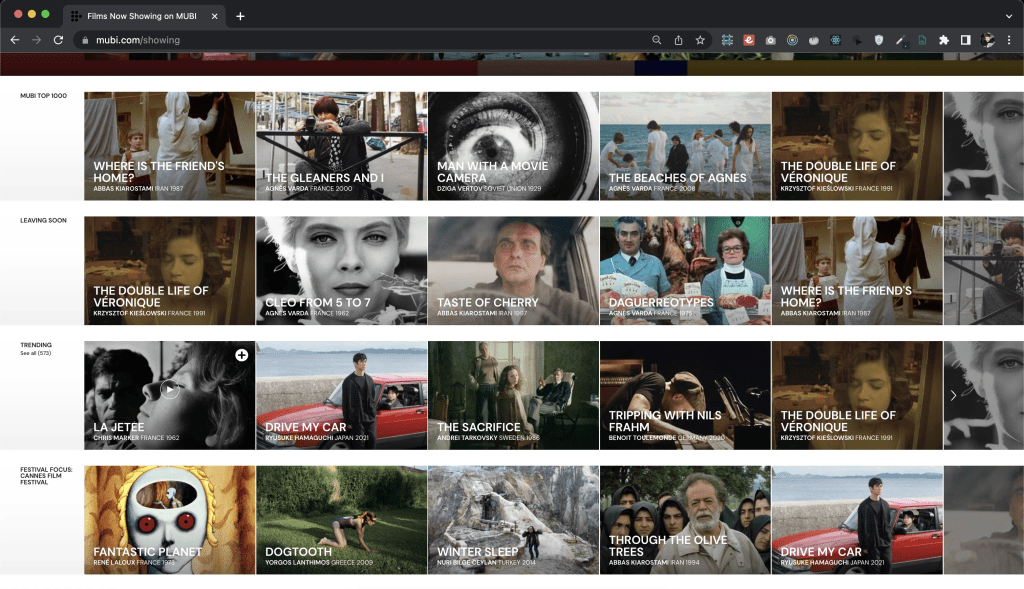
MUBI works best for viewers who want quality and character more than quantity.
It’s a strong fit for:
- Viewers who love independent cinema, international films, and festival-style picks
- People who want curation instead of endless browsing
- Film fans who enjoy director-driven movies and unique storytelling
- Viewers who want a service that feels like a weekly film club
- Anyone who wants fewer options but higher “hit rate” for interesting choices
It can be less ideal for:
- Households that rely on one service for family viewing, kids content, and mainstream blockbusters
- People who want big franchise series and trending originals
- Viewers who dislike rotating catalogs and want permanent “favorites” always available
- Anyone who treats streaming as background entertainment rather than active watching
A simple rule: MUBI is best when the viewer wants to watch one excellent film rather than hunt for “something okay.”
How the MUBI Experience Feels
A lot of streaming platforms feel like warehouses. MUBI feels like a boutique.
Instead of asking viewers to choose from thousands of titles, it often presents a smaller selection that feels deliberate. That changes behavior:
- Viewers watch more intentionally
- People try films they wouldn’t normally click on
- Discovery becomes part of the fun
- The service feels less like “content consumption” and more like “film nights”
In real households, MUBI is usually not the only service. It tends to be the “specialty” subscription that adds depth and taste to a lineup, especially when the main services are already covering mainstream entertainment.
Content Library and Curation
MUBI’s identity is curation.
Instead of competing on volume, it competes on:
- Strong programming choices
- International and indie films that aren’t always easy to find elsewhere
- Festival favorites and director spotlights
- Movies with a distinct voice and creative risk
That doesn’t mean every film is “serious” or “slow.” It means the selection tends to be intentional.
What rotating catalogs mean in practice
Rotating catalogs can frustrate some viewers because titles don’t stay forever. But for film lovers, rotation can be a feature:
- It creates urgency to watch something while it’s available
- It prevents the catalog from feeling stale
- It keeps discovery fresh, like a real cinema lineup
Actionable tip: MUBI works best when viewers treat it like a schedule. If something looks interesting, it gets watched sooner, not saved “for someday.”
Key Features That Matter
MUBI’s best features aren’t loud. They’re the kind of features that quietly improve how viewers choose and watch films.
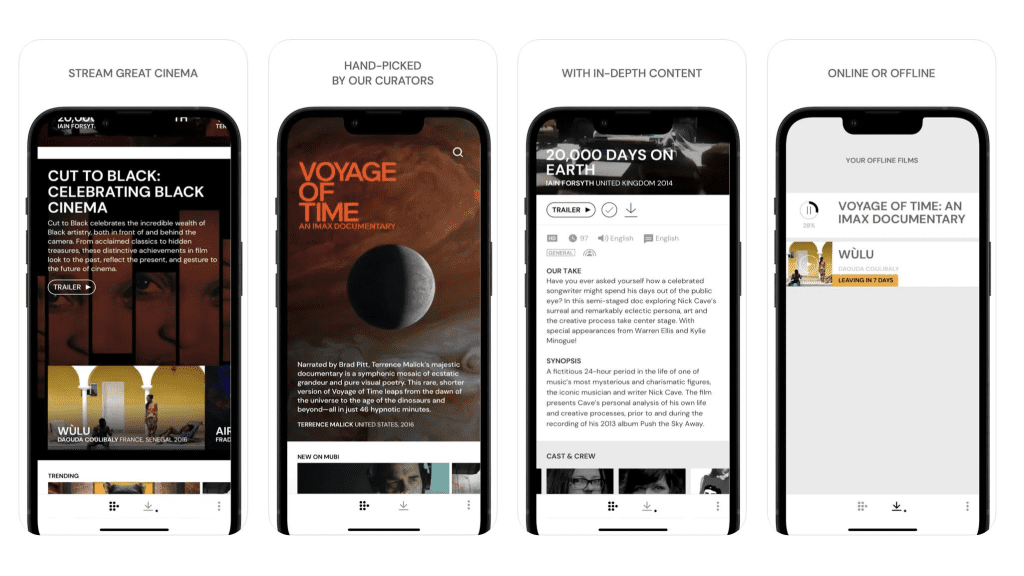
1) Curated recommendations and programming
The service often feels like it’s guided by taste, not purely algorithms. That’s a big deal for people who don’t want their watchlist to be driven by what’s trending.
2) Film notes and context (where available)
For film fans, context is part of the enjoyment. Some viewers like knowing why a film matters, how it fits into a director’s work, or what makes it special.
3) Watchlist behavior that encourages intentional viewing
A watchlist on a huge platform becomes a junk drawer. On MUBI, it can stay small and meaningful. That’s the point.
4) Strong “one film tonight” usability
Because the catalog is curated, it’s easier to pick something within a few minutes. That reduces decision fatigue dramatically.
5) Cross-device viewing
MUBI is most valuable when it’s easy to watch on a TV, then continue on a phone or laptop if needed. Film fans often watch in different settings: home cinema nights, late-night headphones, travel viewing.
Pricing (Evergreen Explanation)
MUBI is typically subscription-based. Prices can vary by country and change over time, so the evergreen way to evaluate it is based on value patterns rather than specific numbers.
The service usually makes sense when:
- The viewer watches a handful of films per month and genuinely enjoys the catalog
- The viewer prefers curated, high-quality picks over endless browsing
- The household already has mainstream services and wants a “film lover” add-on
It makes less sense when:
- The viewer rarely watches movies and mainly follows big series
- The household wants one subscription that covers everyone
- The viewer expects constant mainstream hits and big franchises
A simple value test
- Browse the current selection.
- Pick 3–5 films that feel genuinely exciting.
- If a viewer would happily watch those this month, the subscription usually earns its keep.
- If the viewer struggles to find even two films they want, it may not be the right fit.
This keeps the decision practical, not emotional.
User Base and Who Sticks With It
MUBI’s long-term fans tend to be people who treat movies like a hobby, not just a time-killer.
Common long-term users:
- Film students and film nerds
- People who love international cinema
- Couples who do “film nights” and want something different
- Viewers bored of mainstream catalog sameness
- People who prefer fewer options and better picks
People who often cancel quickly:
- Viewers who want light background entertainment
- Households that want a huge kids and family catalog
- Anyone who subscribes expecting it to replace mainstream platforms
MUBI is not “better” or “worse.” It’s just a different job. It’s the specialty wine bar, not the supermarket.
Advantages
1) Curation reduces decision fatigue
A smaller, deliberate selection makes it easier to pick a film without scrolling forever.
2) Higher “interesting” hit rate for film lovers
If a viewer likes cinema with personality, MUBI often delivers.
3) Strong international and indie identity
It’s a great way to watch films outside the mainstream bubble.
4) Makes movie nights feel intentional
It turns watching into an experience rather than background noise.
5) Complements mainstream services
It adds depth and taste to a streaming lineup instead of duplicating what viewers already have.
Disadvantages
1) Not built for mainstream blockbusters
Viewers chasing franchises and trending hits may feel under-served.
2) Rotating availability can annoy some viewers
If someone wants permanent access to favorites, rotation can feel frustrating.
3) Not ideal as the only household subscription
Families often need broader coverage for different ages and tastes.
4) A curated style can feel “too niche” for some viewers
If a viewer wants easy comfort titles, MUBI might feel unfamiliar.
5) The catalog requires curiosity
The value shows up when viewers are willing to try something new.
Safety, Privacy, and Account Security
MUBI is generally straightforward to use safely. The main safety habits are basic streaming hygiene:
Practical safety checklist:
- Use a strong, unique password
- Avoid sharing logins widely
- Keep the device updated
- Use parental controls and profile separation if children share the same TV
- Be careful when signing in on public devices—log out when finished
The simplest rule: treat it like any paid subscription account and don’t share access casually.
Alternatives to MUBI
The best alternative depends on what the viewer is trying to get from MUBI.
If the goal is curated, prestige film streaming:
- Criterion Channel (where available) for deep film history and classics
- Curated film sections inside premium platforms (depending on region)
If the goal is international cinema plus mainstream in one place:
- Netflix can work for international series/films, but it’s not curated the same way
- Prime Video has variety, rentals, and sometimes strong indie picks, but discovery can feel chaotic
If the goal is arthouse discovery without subscription stacking:
- Rental stores can be more cost-effective for viewers who only watch a few specific films per month
The key: MUBI’s main alternative isn’t one platform. It’s the choice between “curation subscription” and “rent what you want when you want.”
FAQs
- What is MUBI best known for?
MUBI is best known for curated film selections, often highlighting indie, international, and festival-style movies. - Is MUBI a mainstream streaming service?
Not really. It’s more niche and film-focused, designed for viewers who want curation over volume. - Does MUBI have a rotating library?
It often does, which encourages viewers to watch films while they’re available instead of saving everything for later. - Is MUBI worth it for casual viewers?
It depends. If someone enjoys exploring new films, yes. If someone mainly watches mainstream franchises and comfort content, it may feel too niche. - Can MUBI replace Netflix or Prime Video?
For most households, it’s better as a complement rather than a replacement. - Is MUBI good for families with kids?
It’s not primarily built for kids content, so families often pair it with a broader service. - Does MUBI focus on new releases?
Sometimes it highlights newer indie or festival films, but it’s not a day-one blockbuster platform. - How can viewers get the best experience fast?
Treat it like a film club: pick one film this week, watch it intentionally, and explore related titles or directors. - Is it easy to use on a TV?
Generally yes, especially when a viewer prefers the big-screen cinema feel. - Do titles stay available forever?
Rotating libraries mean some titles leave, so favorites may not stay permanently. - Is MUBI safe to subscribe to?
Yes, standard account security habits apply: strong passwords, safe devices, and avoiding login sharing. - Who will love MUBI most?
Film lovers who enjoy curated international and indie cinema, and viewers bored of mainstream catalog sameness. - Who will probably cancel quickly?
People who want huge libraries, kids content, or big franchise hits as their primary viewing. - Does MUBI help with discovery?
Yes—curation is the point. It’s built to reduce decision fatigue and present thoughtful picks. - What’s the smartest way to use MUBI long-term?
Keep it as a specialty service: watch 2–6 films a month, stay curious, and use mainstream services for everything else.
Final Verdict
MUBI is a standout choice for viewers who want curated cinema instead of endless catalogs. It’s not trying to compete with mainstream streaming giants on volume or blockbuster releases. It wins by delivering taste, discovery, and a film-club feel that makes movie nights more intentional. For ForeverWatch readers building a smart streaming lineup, MUBI works best as the “cinema subscription”—the one that brings depth and personality to a household already covered for mainstream entertainment.