
Peacock is the streaming service that often surprises people: it looks simple at first, then it reveals a very specific strength—familiar TV, easy background watching, and a lineup that can feel “cable-adjacent” without forcing viewers back into cable habits. It’s not trying to win the internet with the biggest originals list. It’s trying to win the living room with content people already understand.
The platform’s real value shows up when viewers want a mix of on-demand shows, comfort rewatching, and (depending on region and plan) live-style options that make the service feel more “everyday” than purely binge-driven competitors. That said, Peacock won’t be the perfect main service for everyone. Some households will love it as a primary subscription. Others will use it as a rotation service that fills a specific gap.
This review breaks Peacock down in a practical way: what it’s best for, what the library feels like, how features and pricing usually behave, where it beats competitors, where it falls short, and how to use it intelligently so it feels worth it month after month.
What Peacock Is Best For
Peacock tends to work best for viewers who value familiarity and convenience over endless novelty. It’s usually a strong fit for:
- Comfort TV watchers who like sitcoms, reality, familiar series, and “put something on” browsing
- Households that miss traditional TV energy but still want on-demand control
- People who like a mix of on-demand and live-style viewing where available
- Viewers who rotate subscriptions and want a service that feels different from the usual “binge-first” platforms
- Budget-conscious users who want a plan structure that can scale with how much they watch
It’s often less ideal for:
- Viewers who only want prestige originals and cinema-level curation
- Households that expect one subscription to cover every niche genre
- People who hate ads and don’t want to think about plan tradeoffs
- Users who want a consistent global experience (availability varies by country)
A simple way to summarize fit: Peacock shines when viewers like TV that feels familiar and easy to start, not just “the next big viral show.”
Content Library
Peacock’s library is typically strongest when viewers approach it like a “home for familiar TV” plus a mix of movies and originals, rather than a pure originals machine. The content experience often breaks into a few practical buckets:
- Familiar TV and comfort rewatching
- Next-day or current-season style viewing (where supported)
- Movies that rotate in and out
- Originals and exclusives
- Sports/live-style programming (depending on region and plan)
What the library feels like in real life
Many streaming services feel like a giant warehouse. Peacock often feels like a TV channel guide that learned how to stream. That’s a positive for some viewers because it reduces decision fatigue. Instead of “What masterpiece should be chosen tonight?” it becomes “What easy thing can be put on right now?”
Originals and exclusives
Peacock originals tend to matter most for two types of viewers:
- People who follow specific exclusives and keep the service for those
- Viewers who like rotating subscriptions and want something new without committing to a massive catalog
The key is expectation-setting: Peacock originals can be solid, but the platform’s identity is usually broader than originals alone.
Movies and rotating titles
Movie availability can shift due to licensing. The best mindset for viewers is:
- Treat the movie library as a bonus layer
- If one specific movie is the reason for subscribing, confirm availability in-region first
This keeps the experience smooth and avoids disappointment.
Features That Actually Matter
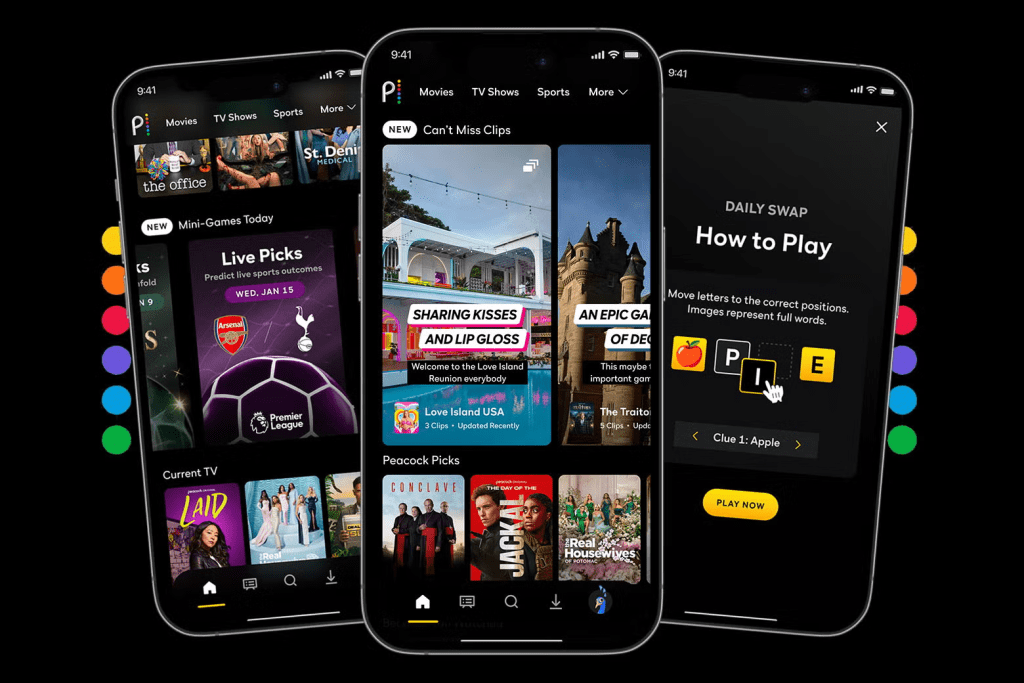
Peacock’s features aren’t usually flashy. They’re practical. That’s the point.
Profiles and household viewing
Profiles make a big difference in households. Without them:
- Recommendations get messy
- “Continue watching” becomes chaotic
- Different tastes collide
With profiles, Peacock feels more personal and less confusing, especially for families.
Watchlist and “keep it simple” browsing
The biggest quality-of-life improvement comes from treating the watchlist like a queue, not storage. When viewers save a short list of “next watches,” scrolling becomes faster and less frustrating.
Actionable method:
- Add 10–20 titles max to the watchlist
- Remove anything that no longer excites
- Keep one “comfort” title available for low-effort nights
Peacock becomes better when it’s used intentionally.
Offline viewing (where supported)
Downloads are one of the biggest value boosters for commuters, travelers, and households with unstable internet. If downloads are available on a viewer’s plan and device, they should be used more often than most people use them.
Practical benefit: downloads turn “streaming” into “reliable entertainment,” which is what households actually want.
Video quality, playback, and device support
Peacock is designed for mainstream devices: smart TVs, phones, tablets, streaming boxes, and browsers. In real life, quality depends on a chain:
- The plan features
- The device capability
- Connection stability
- App performance
If playback looks inconsistent, the best troubleshooting approach is simple:
- Test the same title on a different device
- Restart the router (quick reset solves more than people expect)
- Update the app
- Use downloads (if the connection is the issue)
Pricing Approach and How to Choose a Plan
Exact prices can change and vary by country, so the evergreen way to explain Peacock is by focusing on how the plan decision typically works, not fixed numbers.
Most viewers are choosing between a lower-cost plan (often with ads) and a higher-tier experience (often with fewer ads or extra benefits). The plan choice usually comes down to one question:
Do ads ruin the viewing experience, or are they tolerable?
A simple plan-picking method
This avoids regret and keeps the decision practical:
- Identify viewing style
- Background viewing and casual watching → ads are often tolerable
- Focused drama and movie nights → ads feel more annoying
- Count weekly usage
- If the service is used most days, the ad-free (or reduced-ad) experience often feels worth it
- If it’s used occasionally, a lower-cost plan can make more sense
- Check household friction
- If multiple people share the TV, ads can create “complaints taxes” (everyone moans)
- If one person watches alone, ads may be fine
- Decide whether it’s a core or rotation service
- Core service → smoother viewing matters more
- Rotation service → cheaper plan often makes sense
Peacock is easiest to justify when the plan matches the household’s real behavior, not what they hope they’ll do.
Who Uses Peacock Long-Term
Peacock tends to keep subscribers in a few patterns:
- Comfort-TV households that want familiar shows on tap
- “TV-first” viewers who like the energy of current programming (where available)
- Rotation strategists who subscribe when there’s a specific reason and pause when there isn’t
- Value hunters who want a service that feels useful without trying too hard
A common long-term use case looks like this:
- Netflix (or a big binge service) is the “main” platform
- Peacock is the “easy TV + live-style vibe” platform
- Another service rotates in for prestige or a franchise drop
In that lineup, Peacock often plays a very clear role—and clear roles keep subscriptions alive.
Advantages
Here’s where Peacock usually wins in daily life:
1) Familiar, easy-to-start content
It often feels easier to pick something quickly compared to massive catalogs.
2) “TV energy” without cable commitment
For viewers who miss channel-like simplicity, it can scratch that itch.
3) Strong as a supporting subscription
It pairs well with a binge-first platform and adds variety in how people watch.
4) Plan flexibility for different budgets
It can fit households who want a lower-cost option, depending on region and plan structure.
5) Great for background viewing
Some services demand attention. Peacock often works when people just want something on.
Disadvantages
Peacock also has limitations that matter depending on expectations.
1) Not always the best “only service”
Households wanting one platform to cover every genre may feel it’s incomplete.
2) Ads can be a dealbreaker
If the plan includes ads and the viewer hates interruptions, satisfaction drops fast.
3) Catalog and availability differences by region
The experience can differ depending on location, which can confuse travelers or international readers.
4) Originals may not be enough to carry it alone
For some viewers, originals are a bonus, not a reason to keep subscribing.
The main lesson: Peacock is a strong service when it’s chosen for the right job, not when it’s expected to replace everything.
Safety and Account Security
Peacock is a mainstream platform, but the most common security issues come from account habits, not the service itself.
Typical risks:
- Reused passwords
- Sharing logins too widely
- Falling for fake “billing problem” emails/messages
- Unsecured email accounts (password resets go there)
Practical safety checklist:
- Use a strong, unique password
- Secure the email tied to the account
- Avoid clicking random billing links—log in directly instead
- Use profiles for privacy in shared households
- Review active devices occasionally if many people share access
Simple habits prevent most problems.
Comparisons That Help Viewers Decide
Most people don’t choose Peacock in isolation. They compare it to what they already use.
Peacock vs Netflix
Peacock often feels more TV-like and comfort-driven, while Netflix often feels more binge-first and discovery-driven. Viewers who want “easy TV” often appreciate Peacock. Viewers who want constant new binges often prefer Netflix as a main service.
Peacock vs Prime Video
Prime Video tends to feel like a hub that mixes streaming with rentals and add-ons (depending on region). Peacock tends to feel more like a straightforward streaming destination. Viewers who hate store-style browsing often prefer Peacock.
Peacock vs Disney Plus
Disney Plus is franchise-and-family comfort with strong rewatch value. Peacock is more general comfort TV and live-style vibe (where available). Families often keep Disney Plus as a home base; Peacock often complements it.
Peacock vs Paramount+
Paramount+ often appeals to viewers chasing specific franchises and brand libraries, while Peacock is often chosen for familiar TV variety and day-to-day usability. Many households treat both as rotation services depending on what’s currently interesting.
Peacock vs Max
Max often leans prestige and premium drama. Peacock leans familiar TV and easy watching. Max feels like “sit down and focus.” Peacock often feels like “put something on.”
Alternatives to Peacock
If Peacock isn’t the right match, these alternatives often fit different viewing styles:
- Netflix: strong variety, binge culture, powerful recommendations
- Prime Video: flexible hub with broad catalog (region-dependent)
- Disney Plus: franchises and family comfort viewing
- Max: prestige drama and premium series vibe
- Paramount+: franchise-driven viewing (varies by region)
- Tubi / Pluto TV: free streaming with ads for budget watchers
The smartest household plan is often a small lineup where each service has a job.
FAQs
1) Is Peacock worth it as a main streaming service?
It can be for comfort TV watchers and households that want easy “TV-style” viewing. Variety seekers may pair it with another platform.
2) Is Peacock better as a rotation subscription?
For many viewers, yes. It’s often ideal to subscribe when there’s a strong reason, then pause when interest fades.
3) Does Peacock have enough content for families?
It can, but families who want a dedicated franchise-and-kids home base often prefer Disney Plus as their core.
4) Are ads a dealbreaker on Peacock?
For some viewers, yes. Ads are tolerable for casual background viewing, but they can ruin movies and serious drama nights.
5) How can viewers get more value from Peacock quickly?
Use profiles, build a short watchlist, and decide whether the service is a core subscription or a rotation pick.
6) Does Peacock work well on smart TVs?
In most cases, yes. Performance depends on device age, app updates, and connection stability.
7) Why does the content library vary by location?
Streaming rights and licensing differ by region, so catalogs and features can change across countries.
8) Is Peacock good for binge-watching?
It can be, but it often shines more for comfort series and easy, repeatable TV habits.
9) Can Peacock replace Netflix?
Usually not for households that rely on constant variety and binge-first discovery. Many households use Peacock alongside Netflix instead.
10) Is Peacock a good budget option?
It can be, depending on the plan structure in the viewer’s region and how much they watch.
11) What kind of viewer enjoys Peacock most?
Someone who likes familiar TV, easy browsing, and a “put something on” experience.
12) What’s the biggest weakness of Peacock?
It may not feel like a complete “one service for everything” platform for households with diverse niche tastes.
13) Is Peacock safe to use?
Generally yes, but account security depends on password strength and avoiding phishing attempts.
14) How should a household choose between Peacock and Prime Video?
Choose Peacock for a more straightforward streaming destination; choose Prime Video if rentals and hub-style flexibility matter.
15) What’s the simplest reason to subscribe to Peacock?
It delivers comfort TV and a familiar viewing vibe with low friction for everyday streaming.
Final Verdict
Peacock makes the most sense for viewers who want familiar, easy-to-start TV and a streaming experience that feels comfortable rather than overwhelming. It’s especially strong as a supporting service in a modern lineup, adding a different “TV energy” next to binge-first platforms.
For households that want one subscription to cover everything, it may work better as a rotation pick than a forever main service. But for comfort viewing, quick decisions, and a steady daily-watch vibe, Peacock can be exactly the kind of subscription that quietly earns its spot.