Shudder is one of the rare online streaming services that doesn’t try to be everything to everyone. It is horror-first, mood-first, and unapologetically niche—and that is exactly why it works so well for the right subscriber.
While some platforms win by having the biggest library, this service wins by having the absolute right library. The catalog is designed for people who genuinely enjoy horror as a primary genre, not just casual viewers hunting for basic Halloween movies once every October.
Overview: What Shudder Actually Is
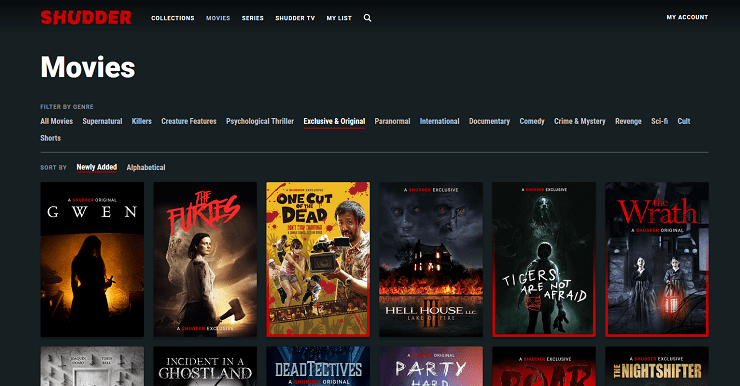
At its core, Shudder is a premium subscription platform entirely focused on horror, psychological suspense, and the best thriller series. Instead of burying scary movies inside a massive, chaotic catalog, it puts them front and center and treats them like the main event.
That focus matters because true fans don’t just want a few spooky options. They want variety inside the genre—different eras, different subgenres, different tones, and different pacing. Shudder leans into that reality, structuring the experience around curated discovery rather than sheer volume.
The expectation reset is simple: Shudder is not meant to replace a household’s biggest general platform. It is meant to be the dedicated specialist subscription that gives genre fans a permanent home.
Who Shudder Is For (And Who Should Skip It)
Shudder is a strong match for:
- Viewers who watch horror year-round.
- Fans of slow-burn tension and gripping Psychological Thriller TV shows.
- People who like curated collections and themed director picks.
- Genre nerds who actively seek out independent and foreign cinema.
- Anyone tired of scrolling mainstream services just to find one decent scary movie.
Shudder is a weaker match for:
- Households that need one service to cover kids’ content, sitcoms, and reality TV.
- Viewers who strictly want the newest theatrical blockbuster releases.
- People who dislike horror but want a general platform with “a little bit of everything.”
A practical way to think about it: if horror is just a “sometimes” genre, this subscription might feel completely optional. If horror is your primary viewing habit, it feels like a mandatory add-on.
Content Library: What Viewers Typically Watch
The real value here is the feeling that the catalog was built by people who actually understand horror fans. The library lands in a few major lanes:
1) Horror films across decades
This includes everything from classic cinema to modern releases, filling in the gaps for viewers who have already seen all the obvious slasher movies on standard apps.
2) Indie and international horror
A massive amount of genre innovation happens outside the biggest studios. Shudder often shines when surfacing smaller, terrifying foreign films that would never trend on a mainstream homepage.
3) Thrillers and psychological suspense
Not everyone wants cheap jump scares. Many subscribers come for the dread, atmosphere, and mental pressure found in top-tier psychological thriller movies.
4) Series and exclusives
Originals give subscribers something they cannot get anywhere else. Whether it is a gripping new anthology or one of the best horror TV shows on the market, the exclusive episodic content helps justify a dedicated monthly subscription.
5) Curated collections
Collections are a huge part of the experience. A highly specific “found footage” row or a dedicated category for classic vampire movies can save a viewer thirty minutes of total indecision.
Discovery: Why Browsing Feels Better
On general platforms, horror often feels like an afterthought hidden in a small corner. Here, it is the whole world.
That changes discovery in a few simple ways:
- Subgenres like paranormal movies and supernatural movies are incredibly easy to isolate.
- Recommendations feel much more aligned with your specific mood.
- The homepage does not constantly fight your taste with unrelated comedy or action promos.
For genre fans, spending less time searching is almost as valuable as having more time to watch. Shudder nails this perfectly.
Features: What Matters Most Day-to-Day
A niche streaming service doesn’t need a mountain of gimmicky features. It needs the core experience to feel smooth. Shudder typically delivers when it nails these basics:
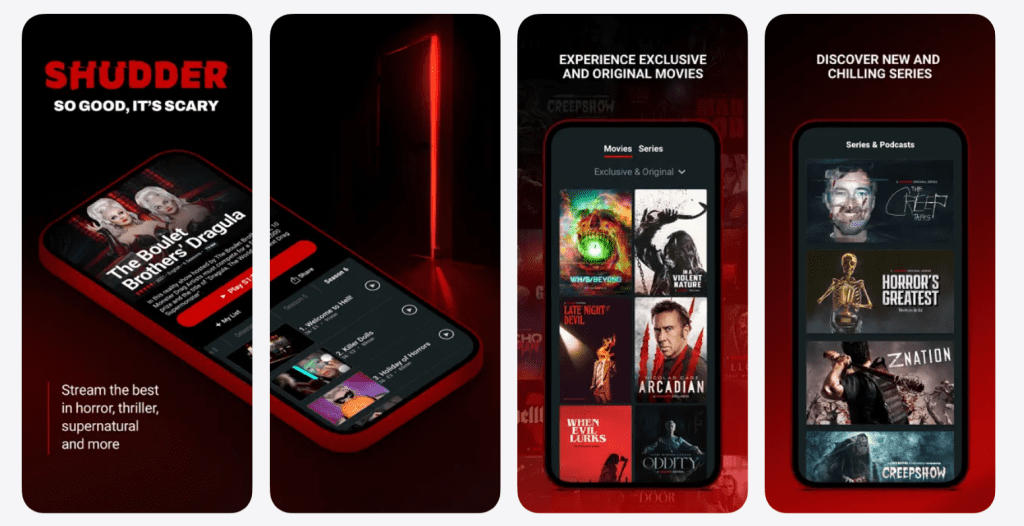
- Clean navigation that makes specific subgenres easy to explore.
- A functional watchlist so casual browsing turns into a solid plan.
- A reliable “continue watching” row that behaves predictably.
- Solid playback across common living-room devices.
Some viewers also love the inclusion of “Shudder TV”—a continuous, live-streaming channel feed. Because horror can be highly enjoyable when it is curated for you rather than chosen by you, this lean-back experience is incredibly underrated on nights when decision fatigue is high.
Pricing: How to Judge Value Without Obsessing Over Numbers
Pricing varies by region and promotional periods (for 2026, it generally sits at $7.99 to $8.99 per month in the US). The smarter way to judge it is not just asking if it is cheap, but asking: Does it deliver enough satisfaction per month to justify being a dedicated subscription?
It feels worth it when:
- A subscriber watches multiple titles or episodes every single month.
- The library consistently surfaces cult classic movies that perfectly match their taste.
- The service naturally becomes the “default horror button” in the home.
It feels less worth it when:
- A viewer only wants to watch one or two specific mainstream hits.
- Horror is a strictly once-in-a-while mood.
Many subscribers treat it as a deliberate rotation subscription—subscribing for a stretch during the fall, watching what matters, pausing, and returning later.
User Base: Who Usually Loves This Platform
The core audience is typically made up of dedicated genre fans, collectors of deep cuts, and viewers who want unfettered access to international horror.
There is also a secondary group: viewers who became horror fans later in life and want a place that helps them explore the genre without guessing where to start. Shudder works beautifully for them because the catalog feels expertly guided.
Advantages: Where Shudder Wins
- Clear identity: The experience feels incredibly focused, which eliminates browsing friction.
- Strong genre depth: General platforms may have a horror tab, but Shudder has immense variety within the genre.
- Curation that makes sense: The collections are built for real fans, not just generated by mindless algorithm boxes.
- Great for mood-based watching: When the goal is “something creepy tonight,” the service delivers faster than any massive general app.
- A strong companion subscription: Pairing this with one major general service is often the best possible living-room setup.
Disadvantages: Where Shudder Can Miss
- Not a one-service solution: It is unapologetically niche, meaning it will never cover every household mood.
- Horror tastes are notoriously picky: Even die-hard fans don’t love every single subgenre. If the catalog leans away from your specific preference, the value drops.
- Smaller overall library: This is expected, but still relevant for viewers who want endless, bottomless variety.
- Simpler overall experience: Some viewers expect deep profile personalization and 4K HDR across the board. A niche service often feels a bit more straightforward technically.
Shudder vs Big Platforms: What the Comparison Really Means
Comparisons get highly misleading when people expect a niche service to compete on total volume.
A general platform will always win on broad variety across genres, mainstream trending content, and whole-household appeal.
Shudder wins purely on depth, offering a much faster discovery process for dark moods and ensuring the genre isn’t diluted. So the real question is: do you want variety across genres, or variety inside horror? If it is the latter, Shudder makes total sense.
Safety and Privacy: Common-Sense Habits
Streaming safety here is mostly basic digital hygiene:
- Use a unique password and avoid sharing logins widely.
- Use device-level PIN locks if kids use the exact same screens.
- Keep your monthly billing organized.
The most common “safety” issue isn’t hacking—it is subscription sprawl. Shudder is easy to manage safely when treated as a deliberate monthly choice.
How to Get the Best Experience Quickly
If you want to know if the service is a long-term match, the fastest test looks like this:
- Pick one subgenre that is a guaranteed win: Choose something you love, like monster movies or intense supernatural thrillers.
- Watch two titles back-to-back: One movie can be misleading. Two gives a much better signal of the catalog’s quality.
- Keep the watchlist short: Save 8 to 12 titles max. Saving 80 titles immediately recreates the “too many options” problem.
Alternatives: What to Use If Shudder Isn’t the Right Fit
If someone wants scary content but this highly focused service isn’t clicking, these alternatives often make sense:
Prime Video: Useful when your actual goal is renting or buying specific, hard-to-find titles rather than paying a monthly fee for curated streaming.
AMC Plus: The smartest bundle option. A subscription here gives you full, direct access to Shudder, alongside the prestige drama of the main AMC network and IFC Films.
Netflix: While not horror-first, it remains a powerhouse for casual genre viewers depending on what global thriller originals are currently trending.
Hulu: Often incredibly strong for network thriller series and broader television variety, depending on your region.
Max: Offers a broader catalog that includes an exceptionally strong mix of classic films, prestige series, and iconic horror picks from the Warner Bros. vault.
Tubi: A fantastic free option with a surprisingly deep, rotating horror selection, great for casual, ad-supported watching.
FAQs
- What kind of service is Shudder?
It’s a subscription streaming platform focused on horror and closely related genres like thrillers and supernatural suspense. - Is Shudder only horror?
Mostly, yes. It leans heavily into horror and horror-adjacent categories. - Who gets the most value from Shudder?
Viewers who watch horror regularly and want variety inside the genre. - Can Shudder replace Netflix or other major services?
For most households, no. It works better as a companion subscription. - Is it good for casual horror viewers?
It depends. If horror is occasional, a general service may be enough. If horror nights happen often, it’s easier to justify. - Does it have series as well as movies?
Yes. Most subscribers use it for a mix of films, series, and exclusive picks. - Is it worth subscribing to year-round?
For dedicated horror fans, often yes. For casual viewers, rotation-style subscribing can be smarter. - Does it offer curated collections?
Yes, and that curation is a big part of why people subscribe. - Is it good for international horror fans?
Often, yes—especially for viewers who want more than mainstream Hollywood options. - Is it suitable for kids?
Generally not. Most households treat it as adult-focused entertainment. - How can someone decide quickly if it’s right?
Watch two titles from a favorite subgenre within the first few days. The fit becomes obvious fast. - What’s the biggest advantage?
Genre depth plus curation that reduces browsing fatigue. - What’s the biggest drawback?
It’s niche. If someone isn’t a consistent horror watcher, it can feel underused. - Is it better than free horror options?
For serious genre fans, usually yes—because the experience tends to feel more curated and consistent. - Who should skip it entirely?
People who dislike horror or only watch one scary movie a year.
Final Verdict: Is Shudder Worth It?
Shudder is worth it for viewers who treat horror as a real hobby, not a seasonal curiosity. The catalog is focused, discovery tends to be faster, and the value shows up when horror nights happen often enough to justify a dedicated subscription.
If the household wants one platform to cover everything, Shudder will feel too narrow. But if the household wants a specialist service that makes horror easy to find and fun to explore, Shudder is one of the most practical subscriptions in the genre space.