
Kayo Sports is what happens when streaming stops trying to be “nice to have” and actively attempts to replace the old pay-TV habit completely. It is an Australia-focused platform designed around one primary job: delivering a massive selection of live events and sports channels without requiring a traditional satellite box.
Instead of presenting itself as a single channel, it acts as a comprehensive live dashboard. The platform typically combines:
- Live events across multiple domestic and international competitions.
- Live channel feeds to recreate the classic “turn it on and keep it on” experience.
- Replays and “minis” (condensed match versions) for rapid catch-up.
- Extensive highlights, clips, and daily sports documentaries to fill the gaps between matchdays.
- Multi-view tools that allow you to track more than one game simultaneously.
The best way to evaluate this platform is through three lenses: rights fit (does it carry your specific league?), viewing style (are you live-first or catch-up friendly?), and device reality (are you mostly watching on a smart TV or a mobile phone?). When those three align, it feels like a flawless replacement for legacy bundles.
Overview
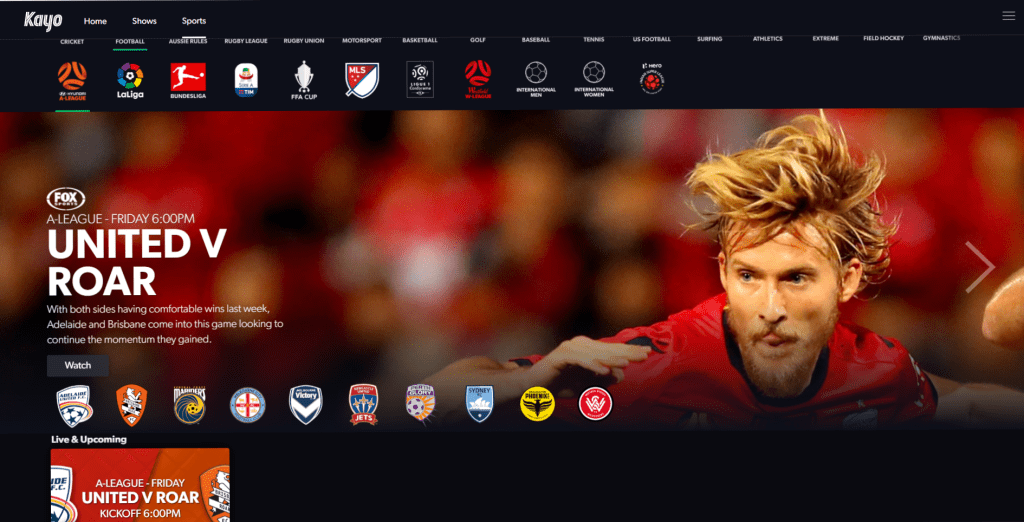
The headline feature of any sports service is obviously its broadcast rights. Following DAZN’s massive acquisition of the Foxtel Group, the platform secured incredibly long-term rights extensions for marquee Australian sports like the NRL and AFL, locking down exclusive matches deep into the next decade. But beyond the broadcast rights, the features that keep people subscribed are purely practical: speed, reliability, and usability.
Live channels and event hubs
A strong platform needs two distinct viewing modes. Event mode lets you pick an exact match, start watching, and jump to another game quickly. Channel mode lets you turn on a feed and let the broadcast schedule run. This app supports both beautifully, which is vital on a packed weekend when you just want to watch live TV without constantly navigating menus.
Replays, condensed games, and minis
Not everyone can watch live, and even the most dedicated fans miss games. Catch-up works best when it is flexible. Viewers can choose between a full match replay, a condensed version, or a rapid highlight package. The “minis” concept is especially useful for fans who want the context of the game without committing to the entire two-hour runtime.
Multi-screen and multi-game viewing
Overlaps are inevitable. Two must-watch matches, one screen, one viewer. The platform frequently solves this with built-in multi-view functionality, allowing you to run split-screen streams simultaneously. This feature is absolutely critical for households with split loyalties or fans who compulsively track multiple games during the finals series.
Start-over, pause, and quick switching
Sports broadcasting lives or dies on user control. The platform nails the basics by offering fast start times, highly stable pause-and-resume functions, and the crucial ability to “start from the beginning” when you arrive late to a live feed.
Profiles, watchlists, and personalization
Personalization is tricky here because fans do not want algorithmic guesses; they want their specific teams, their preferred leagues, and custom match reminders. When you set up your profile correctly, it drastically reduces the time spent hunting for a game right at kickoff.
Casting and living-room compatibility
A subscription is ultimately judged by how it looks on the biggest screen in the house. A strong setup typically includes native smart TV apps, Apple TV support, and seamless casting options. Having a mobile app as a reliable backup during Wi-Fi troubleshooting moments is a massive plus.
Pricing
Pricing in the Australian sports market changes frequently due to rising broadcast costs and corporate acquisitions. A useful breakdown focuses on the structure rather than a single dollar amount. Plans typically revolve around tiers that separate users by two real-world needs: how many simultaneous streams the household requires, and whether 4K resolution is included.
Recently, the service adjusted its pricing structure, lowering the cost of its single-stream Standard tier by a fraction while significantly increasing the cost of its Premium tier (which offers multiple streams and 4K capability).
How to evaluate value without obsessing over price
The simplest method is a three-step value test:
- Count must-watch days per month: If you only watch one or two days a month, the value is questionable. If you watch 8 to 12 days a month, the cost-per-use becomes highly attractive.
- Count overlaps: If your household regularly watches two different live events at the exact same time, a Premium plan that supports multiple simultaneous streams becomes a necessity rather than a luxury.
- Decide if replays matter: If you frequently rely on condensed games during the week, the value increases even in weeks where you completely miss the live broadcasts.
Common pricing traps to avoid
- Paying year-round for seasonal viewing: Many fans binge during the finals and barely watch the off-season. The smartest move is to subscribe during peak months and downgrade or pause when your viewing drops.
- Overpaying for extra streams: Households often upgrade “just in case.” Start on the cheaper tier and only upgrade after a month actually proves the need for a second concurrent stream.
- Buying a second service for one missing competition: If your must-watch list is mostly covered here, adding another expensive app just for one occasional tournament can destroy your budget.
User Base
The platform serves different kinds of fans, and the experience shifts based on your viewing habits.
The weekend sports binge viewer
This viewer stacks broadcasts across Saturday and Sunday. They love flipping between games, keeping a second stream running, and watching highlights between matches. This platform fits perfectly because the interface matches that exact “sports day” behavior.
The single-sport loyalist
This viewer follows one league intensely and watches almost every round. If you specifically need to know where to watch Formula 1 from practice to the podium, this service is unparalleled. However, if your chosen sport is not heavily featured, you will feel like you are paying for breadth you never use.
The multi-sport household
Different people watch different sports. One watches AFL, another watches NRL, and another follows domestic leagues. This service fits because it reduces subscription chaos, covering most domestic needs under one massive umbrella.
The commuter and mobile viewer
This viewer watches on a phone, often on the move. The platform fits if your mobile data plan is generous and your signal is stable, though offline downloads for live sports are not the core pitch here.
Advantages
The strengths here show up in real fan behavior, not just on a feature list.
- Built for live psychology: Fans want incredibly fast access, minimal buffering, and the confidence that the stream won’t collapse during a penalty shootout. Its live-first identity gives it a massive advantage over general entertainment apps.
- Reduces subscription juggling: For Australian audiences, finding reliable sports streaming sites can be a fragmented nightmare. A service that consolidates so many domestic rights into one app drastically reduces stress.
- Match for busy calendars: When weekends are packed, features like quick switching and multi-view create a vastly superior experience compared to bouncing between three different apps.
- Clean pay-TV replacement: For viewers who used to pay for legacy satellite packages mainly to access sports, this delivers that exact same “always on” feeling without the burdensome hardware contracts.
Disadvantages
Even the strongest platforms have predictable pain points, mostly stemming from rights complexity and device differences.
- Rights are easily misunderstood: A fan hears the platform “has everything” and subscribes, only to discover their favorite niche international league is locked behind a different provider. Always evaluate based on your actual must-watch list.
- Live streaming is unforgiving: Movies can buffer for ten seconds and no one cares; live sports cannot. The service is constantly judged on its stability during massive traffic spikes (like a Grand Final), and small technical stutters feel catastrophic.
- Second services are often still needed: While it covers massive ground natively, fans often have one extra niche—like a specific European football league—that requires paying for another service entirely.
- Device experience varies: The app might feel flawless on an Apple TV but clunky on an older smart TV. Remote control usability is a massive part of the living room experience.
Safety
Streaming attracts scams because audiences are highly time-sensitive. People will click almost anything when kickoff is two minutes away, which is exactly what scammers rely on.
The safest way to watch
Always use the official mobile app, the official website, and trusted app stores on your television devices. You must use official billing channels to manage your subscription.
What to avoid
Aggressively avoid “free live match” sites filled with pop-ups, any site requiring a “special player” download, and browser extensions that promise to unlock HD streams. These are direct routes to malware, credential theft, and highly unstable streams that deliberately collapse mid-game.
Good account hygiene includes using a unique password, keeping your subscription email secure, and keeping your streaming devices updated, as outdated operating systems frequently cause app crashes.
Alternatives
The best alternative depends entirely on what you are trying to replace.
Legacy Foxtel packages
For viewers who prefer traditional pay-TV or want a broader channel lineup that includes international news and reality television, a legacy bundle still makes sense, though it carries a much higher cost.
General entertainment streamers
Some mainstream streamers are actively buying up sports windows. If you want occasional events as a bonus rather than a main category, pairing a basic streaming app with free-to-air channels might be enough.
League-specific apps
If you are completely dedicated to one sport—and you just want to watch live cricket without paying for Australian rules football or motorsport—direct-to-consumer league passes are far better for single-sport loyalists.
DAZN
Given that DAZN is now the parent company of the Foxtel Group, international fight fans and followers of global leagues might also explore their broader offerings. Reading a comprehensive DAZN review can help you decide if an international, fight-focused app better suits your weekends.
Ultimately, Kayo Sports wins outright when you want a broad, highly reliable Australian sports home base and you watch live often enough to justify the monthly cost.
FAQ
What is Kayo Sports best for?
Kayo Sports is best for viewers in Australia who want a streaming-first way to watch a broad selection of live sports and sports channels in one place.
Is Kayo Sports available outside Australia?
Kayo Sports is primarily aimed at the Australian market, and availability is generally tied to regional access rules. People outside Australia should expect restrictions.
Does Kayo Sports replace cable sports packages?
For many viewers, yes—especially those who used cable mainly for sports. The replacement depends on whether Kayo carries the viewer’s must-watch competitions.
Does Kayo Sports include replays and highlights?
Most sports streaming platforms include replays and highlight programming, and Kayo is typically designed to support both live viewing and catch-up.
Can Kayo Sports be watched on a smart TV?
Yes, a smart TV or a streaming device is commonly the main way people watch sports services like Kayo. Device performance can vary, so testing on the main TV early is smart.
Can multiple people watch Kayo Sports at the same time?
Simultaneous streaming limits depend on the plan tier. Households that need multiple streams should choose a plan that matches real usage.
Does Kayo Sports offer multi-view or split-screen features?
Kayo is known for tools that help fans follow multiple games. Availability and device support can vary, so the best experience is usually on supported living-room devices.
Is Kayo Sports good for casual sports viewers?
It can be, but value is best when used regularly. Casual viewers may do better with free-to-air broadcasts, official highlights, or subscribing only during peak seasons.
Is Kayo Sports worth it for one sport only?
It depends. If the viewer watches that sport weekly and Kayo carries it consistently, it can be worth it. If it’s only a few events per year, a seasonal subscription strategy may be better.
Does Kayo Sports have ads?
Ad experience varies by content type and rights. Even paid sports services can have ads inside broadcasts because they come from the channel feed itself.
What internet speed is needed for Kayo Sports?
Live sports streaming works best on stable broadband and strong Wi-Fi. The main concern is not only speed but stability—dropouts and weak Wi-Fi matter more than raw bandwidth.
Why does a stream sometimes look lower quality at the start?
Many streaming apps adjust quality automatically based on connection stability. Quality often improves after a short ramp-up once the connection is confirmed.
Is it safe to use unofficial streams instead of Kayo Sports?
Unofficial streams are risky and often unstable. The safest approach is using official apps, official billing, and authorized access routes.
What should a viewer do if Kayo Sports buffers during big games?
A quick checklist helps: restart the stream, switch to a wired connection if possible, reboot the router, reduce other household bandwidth use, and test a different device as a backup.
What’s the best alternative if Kayo Sports doesn’t include a specific competition?
The best alternative is the service that holds rights to that sport in Australia. That can be a league-specific app, a traditional sports package, or another streamer with that competition.
Final verdict
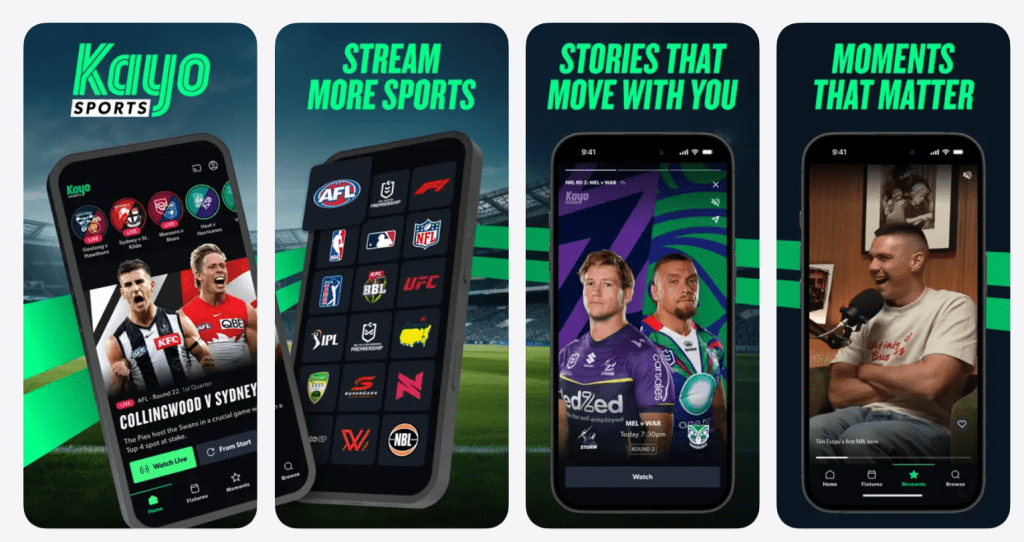
Kayo Sports makes the most sense when it becomes the main sports streaming home for an Australian household that watches live events often and wants a single app that handles packed weekends without fuss. It’s strong at the “sports day” experience—channels, live events, highlights, and tools that help when matches overlap. The main risk is expectation mismatch: if the must-watch list doesn’t align with Kayo’s coverage, or if the household only watches a few events per year, value drops fast. For the right viewer, though, Kayo Sports is exactly what modern sports streaming should be: fast, flexible, and built around how fans actually watch.