Eurosport is built for viewers who want a “season-long” sports home, not a one-league fix, because it mixes year-round cycling, tennis, winter sports, motorsport, snooker, and major multi-sport events into a single ecosystem that changes by country and platform. That mix is exactly why Eurosport can feel unbeatable in one region and confusing in another.
This review breaks down Eurosport in a practical, decision-first way. It explains what it is today, where people actually watch it (traditional TV channels, apps, and bundle platforms), what the streaming experience looks like in different markets, what features matter, how to think about pricing without getting trapped, and who gets the most value from the subscription.
Overview
Eurosport is a long-running European sports brand known strictly for depth rather than hype. Instead of focusing entirely on one flagship domestic football league, the service tends to win with massive volume and variety: entire cycling tours, full tennis tournaments, multi-day winter events, and niche sports that other major broadcasters treat like filler.
The single most important thing to understand about the network is that the old standalone application is dead. Availability and packaging are now entirely country-dependent, and the broadcasting rights landscape has shifted drastically:
- The TNT Sports umbrella: In the UK and Ireland, the Eurosport brand has essentially been sunset and fully absorbed into TNT Sports, creating a single massive destination for live sports under the Warner Bros. Discovery banner.
- The HBO Max ecosystem: In much of mainland Europe, the digital streaming experience has been heavily integrated directly into HBO Max, requiring a base subscription plus a specific Sports Add-on to unlock the live feeds.
- Linear TV channels: Eurosport 1 and 2 are still widely available via traditional cable, satellite, and IPTV packages across the continent.
That means this is no longer a simple “subscribe once, watch everywhere the exact same way” product. If you are desperately trying to figure out where to stream these specific athletic events, you must identify your specific country’s designated streaming home, judge the value based on what you truly watch, and choose your access route accordingly.
Features
The feature story here is not about one single tool; it is an entire ecosystem built on coverage depth, streaming flexibility, and rich event storytelling.
Broad, year-round sports coverage
The service is meticulously designed for fans who want something playing on their television almost every single week of the year. The typical areas of absolute dominance include:
- Cycling: Multi-stage tours, legendary classics, and extended season-long coverage.
- Tennis: Strong coverage in many European markets, including major Grand Slam tournaments.
- Winter sports: Skiing and snow sport disciplines that run fiercely across a full winter season.
- Snooker and Motorsport: Major tournaments and selected racing series that maintain a highly consistent calendar presence.
This sheer variety is the biggest reason the service feels incredibly “sticky.” It actively supports a viewing routine: you watch what is currently in season, and then flow effortlessly into the next sport without ever needing to change streaming services.
Event depth (The “full tournament” factor)
The platform serves fans who actually care about the entire event, not just the championship final. Coverage explicitly includes early rounds, intense qualifying heats, and massive shoulder programming. It treats the sport like a true calendar event rather than a rapid highlight reel.
Streaming integration
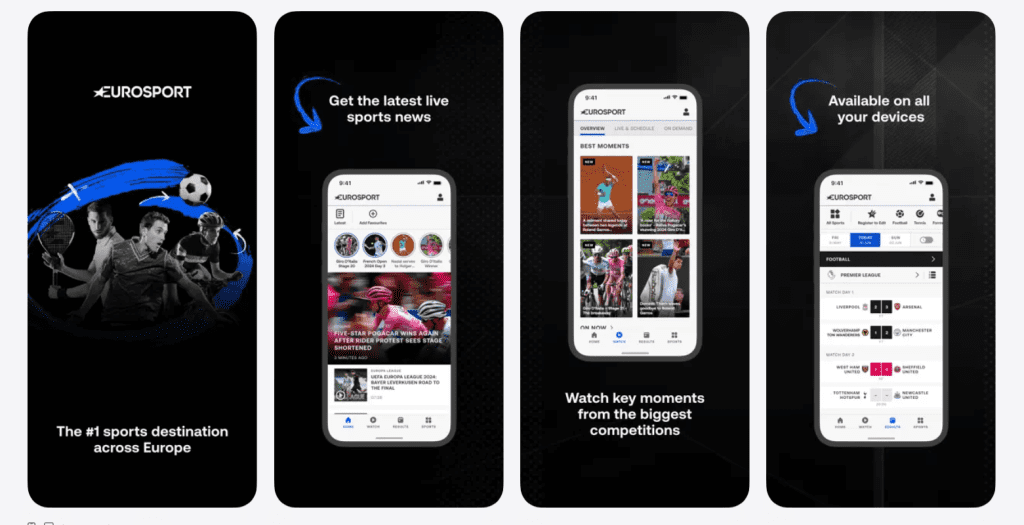
Because the older, single-purpose player has been phased out, you now access the content inside a broader streaming ecosystem. This streaming integration drastically improves overall convenience, giving you one unified login, significantly better device availability, and a much stronger app development cadence than the legacy software ever had.
Live channels and on-demand replays
A premium experience here includes live channels for the main broadcast feed (perfect for easy, lean-back viewing) alongside highly reliable on-demand replays for viewers who miss events. Extended live windows for sports that literally last all day—like grueling cycling stages or multi-session snooker tournaments—make replays an absolute necessity rather than a minor bonus.
Sports storytelling and presentation
The service heavily leans into deep event narratives, intense athlete profiles, and rich documentaries that explain complex rivalries and season arcs. That elite storytelling turns deeply niche sports into highly watchable television, helping casual viewers easily transition into regular, dedicated fans.
Pricing
Pricing is rarely a single, universal sticker number because it completely depends on how the platform is delivered in your specific country. The smart way to think about the cost is to pick your correct access route first, then brutally judge the value based on your actual usage.
You generally pay for access through a traditional TV provider bundle, or through a massive streaming platform where the sports tier is treated as a mandatory monthly add-on to a standard entertainment plan.
The “season stack” value test
The platform is genuinely worth it when it successfully replaces multiple smaller subscriptions or entirely eliminates your weekly viewing friction.
- List your sports: Write down the top three sports you actually watch live (not the ones you aspirationally hope to watch).
- Count realistic monthly usage: If you log in two times a month, it is light usage. If you log in 12 times a month, it is very high usage.
- Check local rights: Confirm that your top sports are truly strong in your specific market, as regional licensing varies heavily.
The biggest pricing mistake
The single biggest mistake is paying for the platform expecting it to be a universal “everything in one place” service across every single European country. The brand can feel incredibly complete in one territory and frustratingly partial in another.
User Base
The platform has a very clear “best user” and a very clear “wrong user.” Understanding exactly where you fit actively prevents subscription regret.
The multi-sport fan
This viewer watches cycling in the spring, tennis through the major summer tournaments, and skiing in the deep winter. The service fits them perfectly because it turns athletic viewing into an unbreakable, year-round routine.
The cycling-first fan
Cycling fans demand full stages, not just the final five kilometers. They want tactical analysis and coverage across the entire grinding season. The network’s coverage style is historically built specifically for this highly dedicated viewer type.
The winter sports loyalist
Winter sports fans often aggressively struggle to find consistent, high-quality television coverage. This platform remains one of the absolute most dependable homes for these cold-weather disciplines across Europe.
The single-league viewer (The caution user)
A viewer who only wants one massive domestic football league is typically much better served by a completely different platform. If your entire weekend revolves around the English Premier League, you need dedicated platforms built for that specific volume, as this network focuses heavily on niche depth rather than domestic football dominance.
Advantages
The advantages are incredibly strong for viewers who watch frequently and across multiple distinct seasons.
- Variety that stays useful: The service is never tied to a single, short season. When one sport ends, another instantly begins, preventing your subscription from becoming dead weight in the off-season.
- Unmatched depth for niche sports: Fans of snooker, cycling, and winter athletics often get vastly better value here than from generic platforms, because this network treats those sports like massive main events.
- Incredible catch-up value: The ability to watch later is a massive win. Weekday stages still get watched, time zones become highly manageable, and strict spoiler avoidance actually becomes possible.
- The perfect companion service: It acts as the ultimate second subscription. Your main service covers your local football league, and this platform covers absolutely everything else, filling out your entire calendar effortlessly.
Disadvantages
The downsides are very real, but they are highly predictable—mostly driven by complex regional rights and modern packaging changes.
- Country-by-country confusion: Streaming access, included sports, and the correct platform app vary wildly. A viewer who naively assumes it is the exact same package globally will end up severely disappointed.
- Consolidation friction: Moving the content into larger platforms improves the software long-term, but it aggressively frustrates legacy subscribers who are simply searching for the old, standalone application.
- Not a universal solution: If you only care about a sport whose premium broadcasting rights are owned exclusively elsewhere in your country, this network will not solve your problem.
- App experience varies: Because the brand now lives heavily inside different massive applications depending on your country, your user experience regarding search, navigation, and simultaneous stream limits will completely depend on the host platform.
Safety
When exploring European sports streaming, you must think about safety in two distinct layers: subscription safety and device safety. Scams spike aggressively during major cycling tours and Grand Slam tennis finals.
Subscribe through official routes
The absolute safest way to secure access is directly through a legitimate TV provider package or through the officially designated streaming platform for your specific country. Actively avoid “discount lifetime accounts” or resold logins from random online marketplaces. Those shady deals always lead to abrupt account shutdowns and stolen payment details right before a massive final.
Avoid “free stream” traps
Unofficial streams are incredibly risky. They aggressively push fake play buttons, trigger devastating malware downloads, and deliberately collapse at the absolute worst possible moment (like match point or the final mountain sprint).
Good account hygiene drastically prevents game-day disasters: use a highly unique password, secure your email access, and always log out of old devices when you upgrade your living room hardware.
Alternatives
The absolute best alternatives depend heavily on your ultimate viewing goal: one specific sport, one massive domestic football league, or localized viewing habits.
For dedicated UK Football coverage
If your primary goal is tracking the biggest domestic matches every weekend, a massive pan-European niche network is not your answer. You will absolutely need a subscription to Sky Sports to catch the vast majority of the Premier League fixtures, or access to the dedicated Sky Sports Football channels to track the EFL Championship and Scottish Premiership.
For a consolidated UK alternative
As mentioned, Eurosport has effectively merged into TNT Sports in the UK. If you want Champions League football perfectly paired with UFC, boxing, and the legacy Eurosport catalog, simply subscribing to the TNT ecosystem is your smartest domestic move.
For German audiences seeking premium sports
If you reside in Germany and want a localized, heavy-hitting alternative that covers both massive football fixtures and international racing, WOW (the streaming service operated by Sky Deutschland) offers a brilliant, dedicated live sports package that completely bypasses the need for a traditional satellite contract.
For local sports rights
In many countries, the absolute best alternative is simply securing access to the local rights holder. If you just want to seamlessly watch broadcasts of your national teams, local pay-TV bundles or country-specific streaming apps often provide a much more localized, focused broadcast than a massive continent-wide network.s or country-specific streaming apps often provide a much more localized, focused broadcast than a massive pan-European network.make the most sense for single-sport viewers; the service itself often wins for multi-sport households.
FAQ
What is Eurosport best known for?
Eurosport is best known for deep, year-round coverage across cycling, tennis, winter sports, snooker, motorsport, and major multi-sport events, depending on the market.
Is Eurosport the same in every country?
No. Eurosport coverage, streaming access, and packaging differ by country due to rights agreements and platform partnerships.
Can Eurosport be streamed without a TV subscription?
In many markets, yes—through the official streaming platform that carries platform content in that country. The exact route depends on the territory.
Where does Eurosport streaming live now?
In many European markets, Eurosport streaming is delivered through a broader Warner-style platform setup rather than a standalone “Eurosport-only” product.
Is Eurosport included with Max or discovery+?
In some countries, Eurosport content is integrated into a Max-style platform or was previously available through discovery+-style plans. Availability and sports add-on rules vary by country.
What happened to Eurosport Player?
In many markets, the older Player-style approach was phased out and replaced by broader platform streaming access routes.
Does Eurosport include the Olympics?
In supported European markets, Eurosport is positioned as a major home for Olympic coverage within the wider Warner ecosystem, with coverage structure varying by territory.
Does Eurosport include tennis Grand Slams?
It depends on the tournament and the country. Some major tournaments are carried in certain European markets, while other markets have different rights holders.
Is Eurosport good for cycling fans?
Yes. Eurosport is widely considered one of the strongest mainstream options for cycling due to extensive season coverage and event depth.
Is Eurosport good for casual sports viewers?
It can be, but value increases with frequent use. Casual viewers who only watch finals or highlights may prefer a cheaper, broader entertainment bundle.
Can Eurosport replace a full sports bundle?
Sometimes, for multi-sport fans who prioritize the platform’s strong areas. For households needing local leagues or specific exclusive sports, the service may be a companion rather than a replacement.
Does Eurosport allow multiple streams at once?
Simultaneous streaming limits depend on the platform and plan used in that country, not only on the brand.
Is Eurosport safe to use?
Yes, when subscribed through official platforms. The biggest risks come from unofficial streams and resold logins.
What’s the biggest mistake people make with Eurosport?
The biggest mistake is assuming the service offers the same sports and the same streaming route everywhere, then subscribing without confirming the correct platform for the country.
Who should subscribe to Eurosport?
Eurosport is best for viewers who watch multiple sports across the year, rely on replays, and want depth in cycling, winter sports, snooker, and major tournaments.
Final Verdict
Eurosport is a high-value sports brand when it matches the viewer’s habits: frequent watching, multi-sport interest, and a preference for full-event coverage instead of only highlights. The modern Eurosport reality is also platform-dependent—Eurosport may live inside a consolidated sports experience in one market and inside a broader Max-style streaming ecosystem in another—so the smartest move is confirming the correct access route before subscribing. When that setup is right, Eurosport becomes the kind of service that fills the calendar, keeps niche sports watchable, and delivers real season-long value rather than a subscription that gets used only a few times a year.