PGA Tour Live is the true difference between merely catching a leaderboard update and actually watching every meaningful swing that matters. It is a product category explicitly made for fans who refuse to wait for the standard broadcast window, do not want to be restricted to only the leaders, and dislike having someone else decide which shots deserve screen time.
The modern golf streaming landscape is also a complicated maze. Broadcasting rights are split by country, while broadcast windows change drastically by tournament. Some platforms offer only condensed highlights, some provide full live feeds, and others bundle golf into a much bigger sports subscription that might also feature the best sports series or extensive sports documentaries. The golf add-on sits right at the center of that ecosystem, and when accessed the right way, it can feel like the absolute most satisfying way to follow a tournament from the opening tee shot to the final putt.
This review thoroughly breaks down what PGA Tour Live is today, how it typically operates (including its relationship with primary networks in key markets), what features actually matter, how to properly judge its value, what the limitations are, and which alternatives make the most sense depending on your specific viewing style.
Overview

PGA Tour Live is best understood as expanded, streaming-first tournament coverage that deeply complements traditional television broadcasts rather than entirely replacing them. The core promise is straightforward:
- More live golf outside the main television broadcast window
- More choice (featured groups, featured holes, and rotating coverage options)
- More consistency for fans who watch Thursday and Friday rounds just as much as Sunday
In many mainstream viewing scenarios—especially within the United States—this live service is heavily associated with ESPN+ and is consumed directly as part of that broader subscription environment. That structural fact matters deeply because it completely changes the buying decision:
- It is frequently less about “buying a standalone golf service subscription,” and far more about unlocking PGA Tour Live coverage through a massive sports streaming plan that might also include access to Paramount Sports content or other major hubs.
For the viewer, the practical outcome is what ultimately counts: an entire tournament week becomes fully watchable, rather than just being viewed in fragments.
The absolute biggest misconception is assuming PGA Tour Live means getting “every tournament and every single shot with zero exceptions.” It simply does not. Broadcasting rights, tournament types, and strict scheduling still apply. However, for a dedicated golf fan who eagerly watches multiple rounds per week, the live package can be the closest thing to a comprehensive “tour-season companion” that exists.
What PGA Tour Live Usually Includes
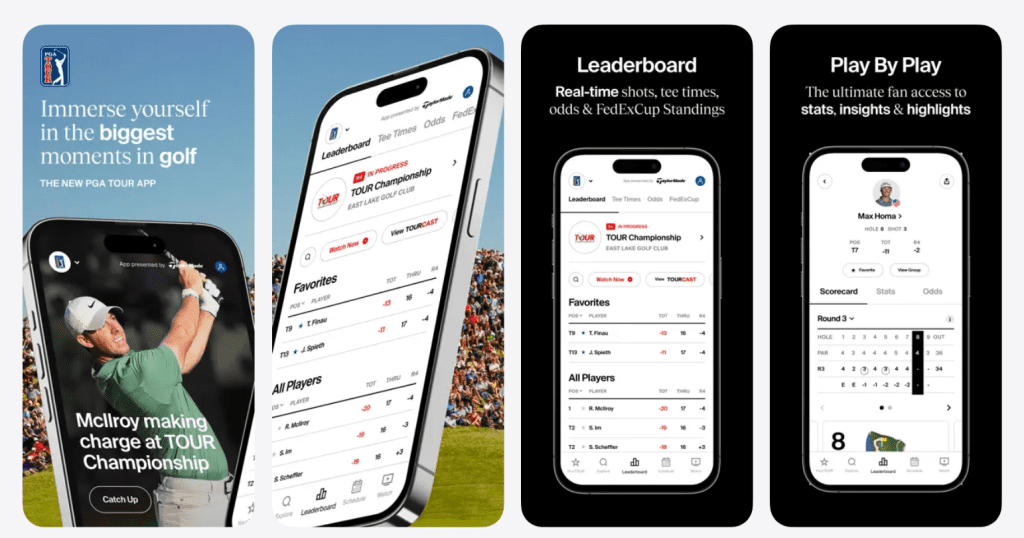
The PGA Tour Live experience is structurally built around multiple live streams rather than one single, linear channel feed. While the exact naming conventions and streams can vary slightly by tournament and season, the basic structure typically looks like this:
- Main Feed / Primary Stream: a curated, broadcast-style live stream that follows the most relevant action across the entire course
- Featured Groups: dedicated, uninterrupted coverage of selected player groups (frequently showing two groups at once, depending on the format)
- Marquee Group: a highly anticipated, star-heavy pairing that receives dedicated spotlighted coverage
- Featured Holes: stationary coverage that stays locked on specific holes, capturing the repeated drama and massive scoring swings
Why this directly matters: golf is fundamentally not like a single-ball sport where one camera easily follows one play. It is parallel action, spread widely across 18 holes, with multiple vital narratives happening at the exact same time. This live service is expertly designed to let viewers actively choose the narrative instead of passively accepting a single, edited storyline.
The strongest possible value comes when viewers:
- Watch early-round action (Thursday/Friday) much more heavily
- Follow specific individual players well beyond just the leaders
- Want a pure, “shots-first” approach rather than relying on studio-heavy coverage
- Use replays and recap viewing to easily stay current
Features
The golf add-on is ultimately judged by one thing: viewer control. When it operates well, it gives complete control back to the fan. When it becomes frustrating, it is usually because something regarding regional access, device performance, or tournament availability breaks that promised control.
Here are the vital features that matter most.
1) Stream choice: featured groups and holes
This is the undisputed signature advantage. Featured groups coverage is explicitly built for fans who religiously follow players, not just static leaderboard positions. Featured holes coverage is built for fans who deeply love patterns—risk/reward holes, par-3 chaos, drivable par-4 drama, and massive momentum swings.
2) Extended coverage outside TV windows
Standard television broadcasts often begin much later in the day or focus tightly on specific windows. PGA Tour Live coverage is aggressively positioned to bring the action earlier, fill in the frustrating gaps, and provide crucial continuity when traditional TV shifts to highlights, studio segments, or limited camera coverage.
3) “Every swing” feel through density
Even when it is not literally every single shot of every player, the viewing experience can feel fully complete because so much action is visible compared to traditional network broadcasts. Fans who want a much tighter, unedited connection to the round typically prefer this dense approach.
4) Multi-device flexibility
PGA Tour Live is perfectly designed for modern, flexible viewing habits:
- TV for those lean-back, long tournament hours
- Phone for quick mobile check-ins, key stretch watching, or commuting
- Laptop for “second screen” viewing seamlessly during work hours
- Tablet for a highly balanced middle ground (portable but featuring a larger screen)
5) Tournament-week routines
A completely hidden but essential feature is routine. PGA Tour Live makes it significantly easier to watch Thursday and Friday rounds, not just the weekend finishes. For countless fans, that early coverage is exactly where a deep attachment to the season is built.
Actionable takeaway: The premium live package is most valuable when it successfully becomes a weekly viewing habit rather than a sporadic, “final round only” purchase.
Streaming Quality and Performance
Golf exposes streaming infrastructure weaknesses incredibly fast. The camera moves continuously to follow the ball. The ball itself is extremely small. Lush greens easily show compression artifacts. And a single round can last for hours—meaning even minor stability problems quickly become major sources of frustration.
A strong, reliable PGA Tour Live experience depends completely on three things:
1) Stable internet
Live golf streams brutally punish shaky connections. If a viewer sees frequent, annoying buffering:
- switching from a congested Wi-Fi network to a stronger band
- moving the router much closer to the streaming device
- using a hardwired Ethernet connection on a smart TV/box often solves far more playback problems than people expect.
2) Modern hardware
Aging smart TVs, older generation streaming sticks, and low-power boxes can heavily struggle when quickly switching streams or loading high-resolution live feeds. Golf fans frequently blame the streaming service when the actual, underlying issue is simply device performance.
3) Updated apps and OS versions
The golf season is remarkably long, and streaming apps change constantly. Keeping the app fully updated drastically reduces random errors, annoying login loops, and total playback failures.
Practical advice: If PGA Tour Live is watched on a weekly basis, investing in a highly reliable streaming device often delivers a vastly smoother experience than relying on an aging smart TV app.
Pricing
Pricing is easily one of the biggest reasons PGA Tour Live stays highly popular: it is usually positioned as incredible high-hour value for fans who watch multiple rounds per week.
The absolute smartest way to judge PGA Tour Live pricing is not by looking at the monthly fee alone, but by measuring the actual hours watched.
A simple, effective value test:
- Estimate your weekly viewing hours during the golf season
- Multiply that by how many tournament weeks are realistically watched
- Compare that time value directly to alternatives (like expensive cable bundles or other major sports services)
Typical viewing profiles:
- Casual fan: 2–5 hours/week, mostly catching weekend highlights and the final round
- Regular fan: 6–12 hours/week, watches early rounds sometimes alongside the weekend coverage
- Hardcore fan: 12–25+ hours/week, watches across multiple days, heavily follows groups, and tracks storylines
The streaming add-on generally makes the absolute most financial sense for the “regular” and “hardcore” fan profiles, because the service’s unique advantage is the sheer volume of live action.
A pricing mindset that carefully avoids regret: If a viewer watches fewer than ~10 tournament weeks per year, a flexible month-by-month approach can be significantly smarter than committing for the entire year. If a viewer enthusiastically watches most weeks, an annual-style approach (where available) tends to feel far more efficient.
User Base
PGA Tour Live is certainly not for everyone. But for the exactly right fan, it rapidly becomes the default way to watch.
1) The “Thursday matters” fan
This viewer deeply believes the tournament is won on Thursday and Friday just as much as on Sunday. PGA Tour Live is brilliantly built for that specific mindset.
2) The player follower
This fan tracks specific golfers and desperately wants to see the early-round grind, not just the polished leaders. Featured groups coverage is the primary hook here.
3) The golf background watcher
Some fans simply do not sit for four hours completely uninterrupted. They want a steady stream running while working, cooking, or doing life. PGA Tour Live works exceptionally well here because it delivers consistent, high-level action without needing constant attention.
4) The shot-by-shot purist
This viewer wants pure density—more swings, far fewer commercials, and way fewer studio interruptions. PGA Tour Live is often much closer to that pristine experience than traditional broadcasts.
Who it’s weaker for:
- The fan who only tunes in for the back nine on Sunday afternoon
- The fan who only wants to watch one massive marquee tournament per year
- The viewer who highly prefers studio-heavy storytelling over live shot volume
Advantages
PGA Tour Live has massive advantages that are genuinely hard to replicate with standard traditional TV coverage.
1) Choice beats curation
Traditional television broadcasts strictly curate the tournament for you. PGA Tour Live gives you options. That major shift alone can completely change how golf actually feels to watch.
2) Better early-round coverage
Many fans care deeply about how top stars start, how cut lines aggressively form, and how course conditions shift across waves. PGA Tour Live makes those early-round narratives highly visible.
3) Featured groups create fan loyalty
Following a featured group for several hours effectively builds a much stronger connection to a round. It is less about simply “checking the score” and far more about “watching the round unfold.”
4) Featured holes capture momentum
Some iconic holes define an entire tournament. A featured holes stream brilliantly lets viewers watch that story repeat and build tension across the field.
5) Multi-tournament seasons become watchable
Golf is fundamentally not one tournament. It is a grueling calendar. PGA Tour Live is a highly calendar-friendly product.
Actionable takeaway: PGA Tour Live’s absolute biggest advantage is the ability to watch golf like a connected season, not like an isolated weekly TV show.
Disadvantages
The drawbacks are entirely predictable. Knowing them upfront prevents deep disappointment.
1) Not every tournament is covered the same way
Coverage depth can vary substantially by tournament. Stream availability and formats can differ based on logistics. That is perfectly normal in sports rights and production, but it can feel incredibly inconsistent if expectations are “one standard product every week.”
2) It doesn’t fully replace TV broadcasts
Many fans still heavily rely on traditional broadcast partners for the main weekend windows, commentary styles, and certain tournament storytelling. PGA Tour Live is a powerful enhancer, not always a full, permanent replacement.
3) Market and region differences exist
Access methods differ wildly by country. What works perfectly in one specific region may not be legally available in the same way elsewhere. A viewer absolutely needs to confirm the correct “home platform” for PGA Tour Live coverage in their market.
4) Device experience varies
On a highly capable device, it is buttery smooth. On a weak device, it can be deeply annoying—slow switching, app freezing, or stream playback errors.
5) Stream choice can overwhelm casual viewers
More streams means vastly more decisions. Some viewers highly prefer “one feed, tell me what matters.” PGA Tour Live is designed primarily for people who actively want to steer.
Safety
PGA Tour Live is completely legitimate. The real safety risks usually come from everything surrounding the event: phishing, illegally resold accounts, and shady “free stream” traps.
Safe habits that actively prevent problems:
- Subscribe only through official platforms authorized in the viewer’s region
- Aggressively avoid “discount lifetime accounts” and resold logins
- Use a highly strong password and perfectly protect the email tied to the account
- Beware of incredibly fake support messages during major tournaments
- Don’t click on random “streaming links” promising unlocked access—those very often carry malware
A reality check: The fastest possible way to ruin a tournament weekend is getting unexpectedly locked out of an account five minutes before the leaders reach the final holes. Official access may cost more than shady access, but it flawlessly delivers reliability.
Alternatives
PGA Tour Live sits prominently in a deeply crowded sports landscape. Alternatives strictly depend on what the viewer actually wants most: PGA TOUR coverage, broader golf, or a massive package of broader sports.
1) ESPN+ (where PGA Tour Live is integrated)
For a large number of viewers in the U.S., this ecosystem is the highly practical alternative and the primary access route. It also seamlessly adds massive other sports value beyond just golf, easily acting as a hub similar to what fans might find when seeking a Fox Sports Live Stream, which drastically improves the “total subscription utility” for divided households.
2) Cable / live TV streaming bundles
Traditional sports bundles can successfully provide:
- network golf coverage
- major weekend broadcast windows
- polished studio shows and event wrap-ups Trade-off: you get significantly fewer match-selection options and much less early-round depth.
3) Golf-focused channels and services in specific countries
In many international markets, golf is carried strictly via highly dedicated sports networks or premium pay-TV packages like Sky Sports or TNT Sports that own the regional rights. Trade-off: coverage can be absolutely great, but match selection and the multi-stream options may be highly limited compared to PGA Tour Live.
4) Official PGA TOUR digital content outside live coverage
The official PGA TOUR ecosystem typically offers great clips, highlight packages, and tracking features. That is not a true replacement for PGA Tour Live, but it can absolutely be a solid companion for fans who simply do not want to pay for full live coverage.
5) Region-specific global sports platforms
In several specific global regions, major streaming hubs like DAZN or Kayo Sports have carried dedicated PGA TOUR offerings alongside other major events. Whether you want to catch the greens or figure out where to watch Formula 1 or where to watch Wimbledon, regional platforms dictate the rules, so availability always needs to be confirmed locally.
How to intelligently pick the best alternative:
- If the viewer demands maximum PGA TOUR live action → PGA Tour Live (via the appropriate access route)
- If the viewer wants pure golf plus heavily varied coverage from leagues like the NFL (e.g., figuring out how to watch Monday Night Football) → a much broader sports streamer may easily win
- If the viewer just wants classic broadcast-style weekend coverage → TV bundles and local rights holders often win the day
- If the viewer wants a pure majors focus → majors rights holders in the viewer’s country usually matter far more than PGA Tour Live
How to Decide if PGA Tour Live Is Worth It
A truly smart decision comes directly from matching the product to the exact viewing personality.
Step 1: Identify the viewing style
- “Watches Sunday only”
- “Watches Thursday–Sunday”
- “Follows certain players”
- “Wants background golf all day”
- “Wants only big tournaments”
Step 2: Identify the main frustration
- “Can’t find the matchups early rounds”
- “Broadcast window starts too late”
- “Too many commercials and talk”
- “Wants to follow a star pairing”
- “Wants a specific hole’s drama”
Step 3: Choose the right use-case
- Featured groups are best for dedicated player followers
- Featured holes are absolutely best for course drama fans
- Main feed is flawlessly best for light steering plus great coverage flow
Step 4: Calculate realistic usage If PGA Tour Live is watched for fewer than a handful of tournament weeks, it may simply not feel worth it. If it successfully becomes a weekly routine, it very often becomes one of the highest “hours per dollar” subscriptions a passionate sports fan can have.
Real-World User Stories
User story #1: The weekday fan A viewer actively works standard hours and cannot catch most afternoon broadcast windows. PGA Tour Live suddenly becomes incredibly valuable because early morning coverage and on-demand replays turn golf into something seamlessly watchable on the viewer’s own schedule. Outcome: Thursday and Friday happily become a core part of the season again.
User story #2: The player tracker A fan deeply follows two or three specific golfers closely. Traditional broadcasts tragically show them only when they are highly contending. This live service completely solves it by putting that specific group on screen for continuous hours. Outcome: the fan actually watches the nuanced season, not just the highlights.
User story #3: The household compromise One person totally loves golf. Another simply doesn’t. A broad, highly expensive sports bundle might be massively underused. The live package perfectly becomes the “golf-first” solution while the household safely uses other cheaper entertainment options. Outcome: vastly better household value without paying for huge, unnecessary channel bundles.
User story #4: The tournament-weekend intensifier A fan completely loves the weekend broadcast but desperately wants more context. PGA Tour Live brilliantly fills in Thursday/Friday, making the weekend feel vastly richer because the viewer perfectly understands who is trending and exactly why. Outcome: the weekend becomes significantly more satisfying, not just a blind sprint to the finish.es more satisfying, not just more dramatic.
FAQ
1) What is PGA Tour Live, exactly?
PGA Tour Live is expanded live streaming coverage designed to provide more shots, more groups, and more tournament access than standard TV windows. It’s built around multiple streams such as featured groups and featured holes.
2) Is PGA Tour Live the same as regular TV golf coverage?
No. Traditional broadcasts are curated and windowed. PGA Tour Live is designed for depth, flexibility, and choice—especially earlier in the tournament week.
3) Does PGA Tour Live show every PGA TOUR tournament?
Coverage can vary by tournament. Some events may have different stream formats or availability depending on rights and production setups.
4) Does PGA Tour Live include the weekend broadcast?
It often complements the weekend broadcast rather than replacing it. Many fans use PGA Tour Live for extended coverage and then watch traditional broadcasts for the main weekend window.
5) What are “featured groups” and why do they matter?
Featured groups are dedicated streams that follow selected player pairings. They matter because they let fans watch specific golfers for long stretches instead of waiting for brief broadcast cut-ins.
6) What are “featured holes” and who is that for?
Featured holes streams stay focused on specific holes, capturing repeated action as the field plays through. It’s great for fans who love seeing how one hole shapes a tournament.
7) Is PGA Tour Live good for casual golf viewers?
It depends. Casual viewers who only watch Sunday may not use it enough. Viewers who enjoy Thursday and Friday coverage or follow players closely often get much more value.
8) Does it work outside the U.S.?
Availability depends on the viewer’s region. Some markets use local broadcasters, pay-TV sports channels, or region-specific streaming partners. The best approach is confirming the official access route in the viewer’s country.
9) Is PGA Tour Live the best way to watch golf year-round?
It’s one of the best ways to follow the PGA TOUR season, but it doesn’t automatically cover every major championship or non-PGA TOUR event. Golf fans often combine it with other services during major windows.
10) Can it be watched on a smart TV?
Yes, typically through supported apps and streaming devices. For the smoothest experience, a modern streaming device often performs better than older smart TV apps.
11) Why does streaming quality sometimes look worse than cable?
Streaming quality depends on internet stability, device hardware, and app performance. Golf also exposes compression artifacts because of constant motion and small-object tracking.
12) Are replays included with PGA Tour Live?
Replay availability depends on platform implementation and region, but replays and catch-up viewing are commonly part of the value proposition for fans who can’t watch live.
13) Does PGA Tour Live allow multiple streams at once?
Multi-view functionality depends on device and platform support. Some setups allow easy switching or picture-in-picture style viewing, while others focus on single-stream playback.
14) Is PGA Tour Live safe to subscribe to?
Yes, when subscribed through official platforms. The main safety risks come from unofficial streams, resold logins, phishing messages, and fake “support” scams.
15) Who should subscribe to PGA Tour Live?
PGA Tour Live is best for fans who watch multiple rounds per tournament, follow specific players, enjoy early-round action, and want more choice than traditional broadcasts.
Final Verdict
PGA Tour Live is at its best when it’s treated like a season companion: a way to watch more golf, earlier, with more control over which groups and holes matter most. It won’t solve every rights issue in every country, and it doesn’t always replace the weekend broadcast experience—but it consistently upgrades the week-by-week reality of following the PGA TOUR. For fans who watch more than just Sunday, who follow players instead of only leaders, and who value “more swings, fewer gaps,” PGA Tour Live can be one of the most satisfying golf streaming options available.